
Rolling Masterpieces: Fun Facts About Unique and Rare Cars

Rolling Masterpieces: Fun Facts About Unique and Rare Cars

The automotive world is filled with vehicles that are rare not just for their limited production numbers, but for the sheer audacity of their engineering, design, or price tag. These unique and rare cars from around the world offer a window into history, innovation, and the extreme limits of wealth and passion.

The Unthinkable Price Tags

The true measure of a car’s rarity and desirability is often its auction price, a space dominated by vehicles with rich racing histories and impossibly low build counts.

  • The World’s Most Expensive: The record for the most expensive car ever sold at auction is held by the 1955 Mercedes-Benz 300 SLR Uhlenhaut Coupé, which fetched an astronomical $143 million (approx. €135 million). Only two prototypes of this racing legend were ever built, making it one of the most exclusive automobiles in existence.
  • The Ferrari Tax: The most expensive marque at auction is consistently Ferrari, particularly the racing-homologated 250 series from the 1960s. For years, the Ferrari 250 GTO was the undisputed champion, with only 36 ever made, cementing its place as the ‘holy grail’ of car collecting.
  • The F1 Record: Even recent race cars achieve astronomical prices. A 2013 Mercedes-AMG Petronas F1 W04, which was Lewis Hamilton’s first winning F1 car for the team, sold for over $18 million, highlighting the unique value of vehicles with significant motorsport provenance.

Engineering Feats and Quirky Designs

Rarity isn’t only about cost; it’s about revolutionary and sometimes bizarre engineering that never quite made it to the mainstream.

  • The Amphibious Car: The Amphicar of the 1960s is famous for being the only mass-produced civilian car capable of operating on both land and water. It was propelled by twin propellers when in the water, giving its driver truly unique versatility—if modest speeds—in both environments.
  • The Single-Door
Rolling Masterpieces: Fun Facts About Unique and Rare Cars Read More
Sculpted by the Wind: Future Automotive Design Trends for Energy-Efficient Vehicles

Sculpted by the Wind: Future Automotive Design Trends for Energy-Efficient Vehicles

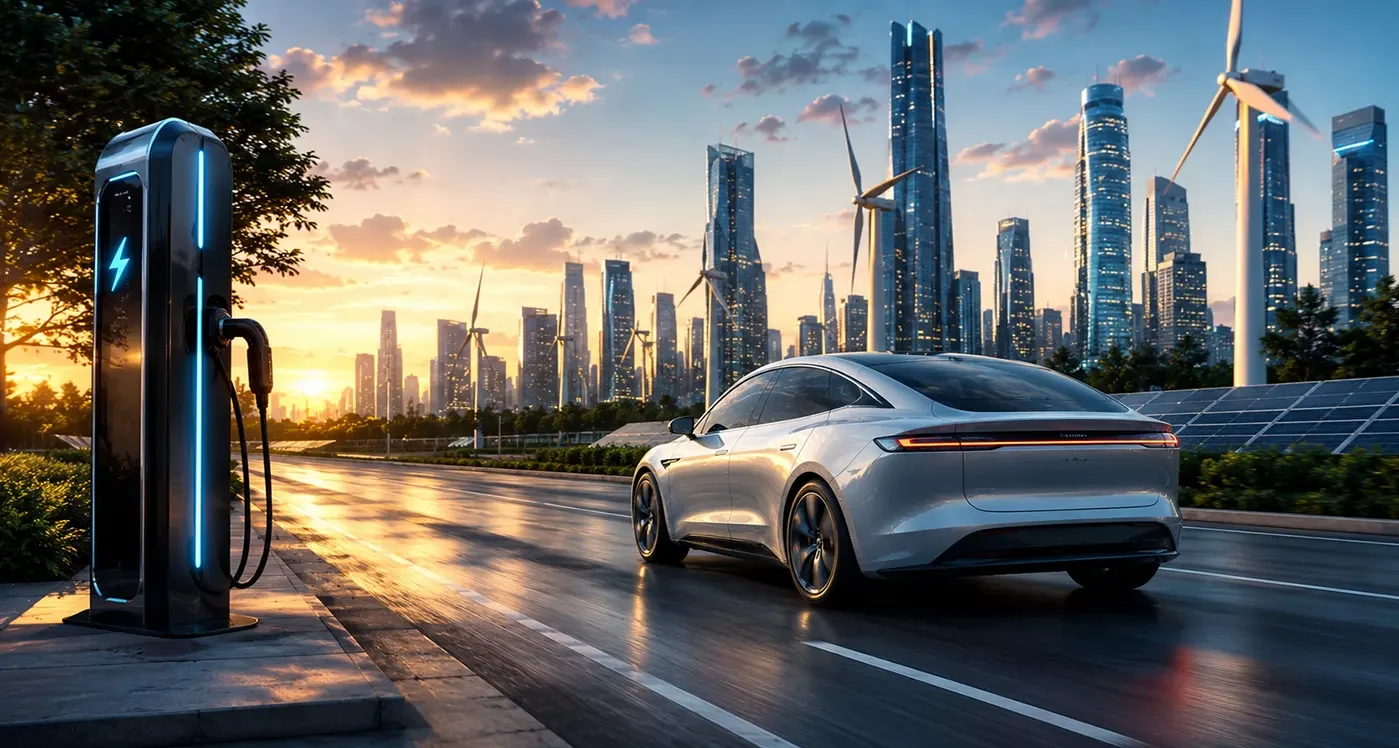
The monumental shift from the internal combustion engine (ICE) to electric powertrains is not just changing what’s under the hood; it’s radically reshaping the entire vehicle. The future of automotive design is being dictated by the immutable laws of physics and economics: to maximize the driving range of an electric vehicle (EV), efficiency is paramount. This singular goal is driving three major future automotive design trends for energy-efficient vehicles: extreme aerodynamic optimization, lightweight multi-material construction, and a complete reimagining of interior space.

1. Extreme Aerodynamic Optimization

Air resistance is the single largest factor limiting an EV’s range at highway speeds, consuming over 50% of the energy. Future designs treat the car as an airfoil, relentlessly sculpted to reduce the drag coefficient ($\text{C}_\text{d}$).

  • Sleek, Monolithic Forms: Traditional grilles, cooling vents, and sharp body creases—necessary for ICE cooling—are disappearing. The trend favors sealed, fluid, and minimalist body shapes that allow air to flow seamlessly from nose to tail.
  • Active Aero Integration: Active aerodynamics are becoming standard. These include adjustable spoilers, rear diffusers, and grille shutters that dynamically open or close. For example, a grille will close at highway speed to reduce drag but open at low speeds for battery cooling, ensuring maximum efficiency under all driving conditions.
  • Minor Drag Reduction: Even minor elements are being redesigned: flush, pop-out door handles, camera-based side “mirrors,” and aerodynamically optimized wheels are all critical in shaving off the small fractions of drag that cumulatively add miles to the range.

2. The Multi-Material Lightweighting Mandate

The heavy battery pack adds significant weight to an EV. To counteract this, future automotive bodies are focusing on lightweight materials to improve the essential power-to-weight ratio, which directly increases efficiency.

  • Carbon Fiber and Advanced Alloys: The industry is moving beyond traditional steel, utilizing multi-material architectures. This involves strategically
Sculpted by the Wind: Future Automotive Design Trends for Energy-Efficient Vehicles Read More
Chrome and Culture: The Impact of Iconic Cars in Movies and Media

Chrome and Culture: The Impact of Iconic Cars in Movies and Media

Cars are far more than mere props in film and television; they are characters, symbols, and often, the very heart of the narrative. The cultural impact of iconic cars in movies and media is profound, transforming ordinary vehicles into global legends, shaping design trends, and influencing the collective identity of generations.

The Car as Character and Identity

In cinema, a car often serves as an extension of the protagonist’s personality, driving not just the action, but the emotional core of the story.

  • The Spy’s Sophistication: The Aston Martin DB5 from the James Bond franchise became the ultimate symbol of British elegance, technological prowess, and effortless cool. Equipped with gadgets like an ejector seat and machine guns in Goldfinger (1964), the DB5 immediately transcended its status as a luxury vehicle to become the benchmark for all cinematic spy cars, influencing Aston Martin’s real-world brand identity for decades.
  • The Time Machine: The DeLorean DMC-12 from Back to the Future is perhaps the best example of a car saved from obscurity by cinema. Its futuristic stainless-steel body and distinctive gull-wing doors made it the perfect vessel for time travel. The movie’s success cemented the DeLorean as a sci-fi icon, inspiring countless fan replicas and conventions, long after its original manufacturer went out of business.

Shaping Trends and Fandom

The on-screen presence of a vehicle can launch a car into the stratosphere of popular demand, influencing consumer behavior and even the direction of automotive design.

  • Muscle and Rebellion: The raw, Highland Green 1968 Ford Mustang GT 390 Fastback driven by Steve McQueen in Bullitt (1968) did more than feature in a legendary chase scene; it solidified the Mustang as the definitive symbol of American muscle, rebellion, and anti-hero cool.This association continues to fuel the car’s enduring appeal and high resale value among enthusiasts.
  • The
Chrome and Culture: The Impact of Iconic Cars in Movies and Media Read More
The Intelligent Network: Connected Smart Car Ecosystems and IoT Integration

The Intelligent Network: Connected Smart Car Ecosystems and IoT Integration

The modern vehicle is rapidly evolving from a standalone mode of transport into a sophisticated, mobile node within a vast, interconnected network. This revolution is driven by the integration of the Internet of Things (IoT), forming complex connected smart car ecosystems that leverage real-time data to enhance safety, efficiency, and the overall driving experience. This deep connectivity is the foundational technology enabling the future of smart mobility and autonomous driving.

IoT as the Backbone of V2X Communication

At its core, the connected car functions as a massive sensor gathering data on its own performance and surrounding environment. IoT technology provides the communication channels (often leveraging 5G networks for high speed and low latency) necessary for the vehicle to communicate with everything (V2X).

  • Vehicle-to-Vehicle (V2V): Cars exchange critical data (speed, location, braking status) directly with nearby vehicles. This allows cars to “see” around blind corners or anticipate sudden braking events in ways human drivers or individual sensors cannot, leading to advanced collision avoidance and improved road safety.
  • Vehicle-to-Infrastructure (V2I): Vehicles communicate with smart city elements like traffic lights, road signage, and parking sensors. This integration enables dynamic traffic light algorithms that reduce congestion, real-time alerts about road hazards, and seamless guidance to available parking spaces.
  • Vehicle-to-Cloud (V2C): Data is transmitted to cloud platforms for processing and analytics. This enables over-the-air (OTA) software updates, remote diagnostics, and personalization features, transforming the car into a service platform.

Enhancing Safety and Operational Efficiency

The greatest immediate benefit of this IoT integration is the dramatic improvement in safety and operational performance.

  • Predictive Maintenance: Sensors continuously monitor the health of vehicle components, predicting failures before they occur. The vehicle can alert the driver or the service center for timely intervention, reducing downtime and preventing costly, unexpected breakdowns.
  • Emergency Response: Connected cars can automatically
The Intelligent Network: Connected Smart Car Ecosystems and IoT Integration Read More
Defying Gravity: How Supercars Achieve Extreme Speed and Performance

Defying Gravity: How Supercars Achieve Extreme Speed and Performance

The pursuit of breakneck speed and physics-defying performance is the essence of the supercar. These machines are not merely fast; they are rolling laboratories where the limits of automotive engineering are continually tested and redefined. Achieving their extreme capabilities—often accelerating from 0 to 100 km/h in under three seconds and cruising beyond 320 km/h (200 mph)—relies on a three-pronged approach: Brute Power, Minimal Weight, and Masterful Aerodynamics.

1. Brute Power: The Engine as Art

At the heart of every supercar is a powertrain designed for maximum output.

  • Engine Mastery: While traditional supercars relied on large-displacement, naturally aspirated engines (like the iconic V10s and V12s) to produce high horsepower, modern hypercars use sophisticated technology to generate equivalent power from smaller units. Turbocharging and supercharging are universally employed, forcing massive amounts of air into the combustion chambers to achieve staggering output, often exceeding 750 horsepower. The Bugatti Chiron’s Quad-Turbo W16 is the ultimate expression of this principle.
  • The Electric Torque Boost: The newest frontier is hybridization. Models like the Ferrari SF90 Stradale and McLaren P1 pair high-output combustion engines with electric motors. The instant, massive torque delivered by electric motors provides a crucial boost, effectively eliminating turbo lag and enabling the brutal acceleration figures that define the modern hypercar era (e.g., the Rimac Nevera, a fully electric hypercar, can hit 60 mph in under 2 seconds).

2. Lightweight Materials: The Power-to-Weight Ratio

Speed is not just about power; it is also about the mass that power must move. Supercar engineers prioritize an exceptional power-to-weight ratio to enhance acceleration and agility.

  • Carbon Fiber Dominance: Supercars utilize materials straight from aerospace and Formula 1. Carbon fiber is the fundamental building block. Monocoque chassis—the structural “bathtub” that houses the cockpit—are often made entirely of this material, offering unparalleled rigidity and strength while weighing significantly
Defying Gravity: How Supercars Achieve Extreme Speed and Performance Read More