
The battery is the heart of every Electric Vehicle (EV), and its performance dictates both driving range and the vehicle’s long-term value. Understanding electric car battery efficiency and maintenance tips is crucial for EV owners looking to maximize their range and ensure the longevity of this vital, high-tech component. While modern EV batteries are remarkably sophisticated and require less maintenance than internal combustion engines, a few smart habits can significantly enhance their operational life.
The Science of Efficiency
Electric car battery efficiency is measured by how effectively the stored energy is converted into driving power. Factors that commonly degrade efficiency include extreme temperatures and aggressive driving habits.
- Temperature Management: Lithium-ion batteries perform optimally within a moderate temperature range. High heat is the battery’s biggest enemy, accelerating degradation. Conversely, extreme cold temporarily reduces power and charging efficiency. Modern EVs use sophisticated Battery Thermal Management Systems (BTMS) to regulate temperature, but smart maintenance complements this.
- Driving Style: Just like gasoline consumption, aggressive acceleration and hard braking diminish efficiency. Utilizing the EV’s regenerative braking system maximizes efficiency by recapturing kinetic energy and returning it to the battery, essentially charging the car as it slows down.
Essential Maintenance Tips for Longevity
Proper charging habits are the most impactful form of battery maintenance.
- Avoid Extreme State-of-Charge (SoC): Most manufacturers and battery experts recommend keeping the battery’s charge level between 20% and 80% for daily driving. Consistently charging to $100\%$or letting the charge drop below$20\%$puts unnecessary stress on the cells, accelerating degradation over time.Many EVs allow you to set an upper charging limit for this exact reason.
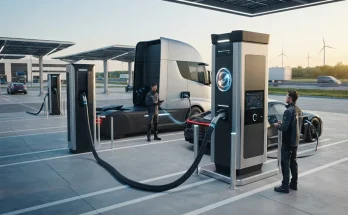
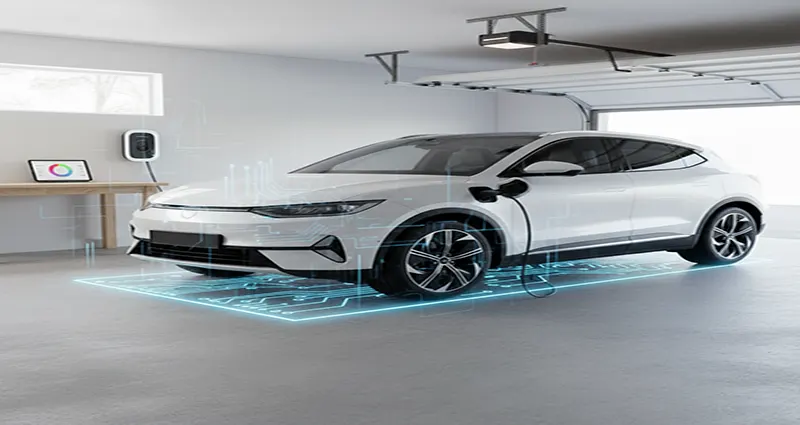
- Minimize DC Fast Charging (DCFC): While convenient for road trips, frequent use of high-power DCFC generates significant heat, which can stress the battery. For daily charging, rely on Level 1 (standard outlet) or Level 2 (home charger) AC charging, which is gentler on the battery cells.
- Prevent Extended Storage at High/Low SoC: If you plan to park your EV for an extended period (more than a few weeks), ensure the battery is charged to a moderate level, ideally around $50\%$. Storing the battery fully charged or completely depleted can cause irreversible damage.
- Manage Temperature Extremes: Whenever possible, park your EV in a garage or shaded area during hot weather. If you must charge in freezing temperatures, pre-conditioning the battery (often done automatically or via an app before a scheduled charge) helps the battery reach an optimal charging temperature.
By adopting these simple, proactive maintenance practices, EV owners can ensure their battery operates at peak efficiency, guaranteeing maximum range for every journey and preserving the vehicle’s long-term health and resale value.