
The term classic car is more than just an age category; it’s a designation reserved for vehicles that transcend mere transportation to become icons of design, engineering, and cultural significance. The history and evolution of classic cars reflect over a century of human ingenuity, economic shifts, and a passionate dedication to the art of the automobile.
The Defining Eras of Automotive History
While the specific age range for a “classic” varies (often considered 20 to 45 years old, with Vintage applying to 1919-1930 and Antique to pre-1919), the evolution is best viewed through distinct design and technological periods.
1. The Brass and Vintage Eras (Pre-1930s)
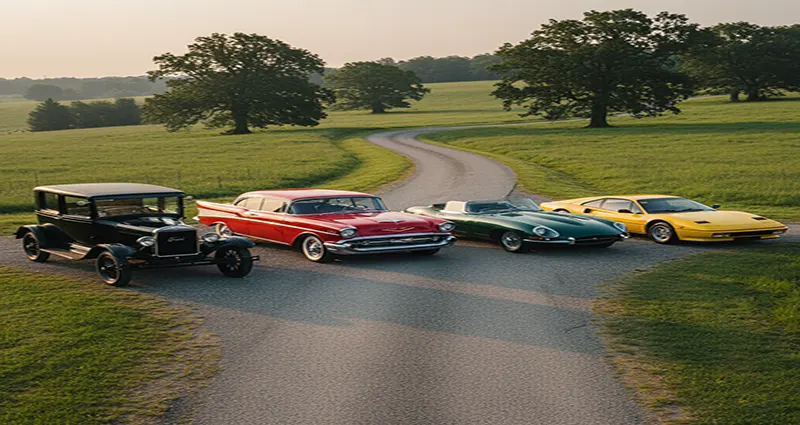
The journey begins with the early “horseless carriages” like the Benz Patent-Motorwagen (1886). The Ford Model T (1908) ushered in mass production, making cars accessible to the average person. The Vintage Era of the 1920s saw cars evolve from utilitarian boxes into symbols of status and freedom. Innovations like the electric starter, four-wheel brakes, and closed cabins became standard, exemplified by luxurious marques like Duesenberg and Packard.
2. The Streamlining and Post-War Boom (1930s-1950s)
The 1930s introduced the influence of the Art Deco movement, shifting designs toward sleek, aerodynamic shapes. Cars like the Cord 810 showcased streamlining and innovative features like concealed headlights. The post-World War II era ignited a consumer boom, making the 1950s the “Golden Age.” This period brought dramatic styling: chrome accents, flamboyant two-tone paint, and the iconic tail fin, epitomized by the Chevrolet Bel Air and the Ford Thunderbird, reflecting American optimism and the Space Age.
The High-Performance Classic Era
The 1960s and 1970s saw a schism between American power and European sophistication, giving birth to some of the most enduring classics.
- The Muscle Car: Driven by youth culture and a simple formula of putting large V8 engines into mid-sized bodies, cars like the Ford Mustang, Chevrolet Camaro, and Dodge Charger became cultural phenomena. These were accessible, powerful, and aggressively styled, forever linking the classic car movement with raw American performance.
- The Supercar: Simultaneously, European manufacturers were pushing the limits of speed and design. Models like the Jaguar E-Type were lauded for their elegance, while the Lamborghini Miura essentially created the template for the modern supercar: mid-engine layout, stunning aesthetics, and blistering performance.
Lasting Impact on Modern Design
Classic cars are not just relics; they are a constant source of inspiration for modern automotive design. Features we take for granted today, like the three-point seatbelt (pioneered by Volvo in 1959), improved suspension, and power steering, all have their roots in this history.
Today’s “modern classics”—vehicles from the 1980s and 1990s—are valued for the nostalgia they evoke, representing the dawn of digital dashboards and advanced electronics while retaining a raw, engaging driving feel. The ongoing passion for exploring the history and evolution of classic cars ensures that these masterpieces remain preserved, celebrated, and influential for generations to come.