
The monumental shift from the internal combustion engine (ICE) to electric powertrains is not just changing what’s under the hood; it’s radically reshaping the entire vehicle. The future of automotive design is being dictated by the immutable laws of physics and economics: to maximize the driving range of an electric vehicle (EV), efficiency is paramount. This singular goal is driving three major future automotive design trends for energy-efficient vehicles: extreme aerodynamic optimization, lightweight multi-material construction, and a complete reimagining of interior space.
1. Extreme Aerodynamic Optimization
Air resistance is the single largest factor limiting an EV’s range at highway speeds, consuming over 50% of the energy. Future designs treat the car as an airfoil, relentlessly sculpted to reduce the drag coefficient ($\text{C}_\text{d}$).
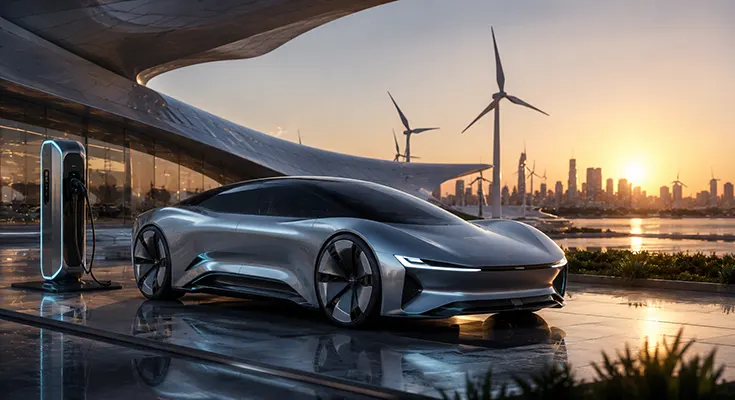
- Sleek, Monolithic Forms: Traditional grilles, cooling vents, and sharp body creases—necessary for ICE cooling—are disappearing. The trend favors sealed, fluid, and minimalist body shapes that allow air to flow seamlessly from nose to tail.
- Active Aero Integration: Active aerodynamics are becoming standard. These include adjustable spoilers, rear diffusers, and grille shutters that dynamically open or close. For example, a grille will close at highway speed to reduce drag but open at low speeds for battery cooling, ensuring maximum efficiency under all driving conditions.
- Minor Drag Reduction: Even minor elements are being redesigned: flush, pop-out door handles, camera-based side “mirrors,” and aerodynamically optimized wheels are all critical in shaving off the small fractions of drag that cumulatively add miles to the range.
2. The Multi-Material Lightweighting Mandate
The heavy battery pack adds significant weight to an EV. To counteract this, future automotive bodies are focusing on lightweight materials to improve the essential power-to-weight ratio, which directly increases efficiency.
- Carbon Fiber and Advanced Alloys: The industry is moving beyond traditional steel, utilizing multi-material architectures. This involves strategically integrating materials like aluminum alloys and carbon fiber reinforced plastics (CFRP) into the body structure. For example, high-strength steel is retained for the safety cage, while aluminum or composites are used for exterior panels and non-structural elements.
- Component Consolidation: New manufacturing techniques like gigacasting (casting large single body parts) and the use of structural batteries (integrating the battery pack into the chassis) eliminate hundreds of separate components. This consolidation reduces material waste, simplifies assembly, and shaves off critical kilograms, boosting efficiency.
3. Reimagining the Interior: Cab-Forward Design
The compact nature of the electric motor and the flat, floor-mounted battery pack grant designers unprecedented freedom, leading to “skateboard” platforms and a cab-forward design philosophy.
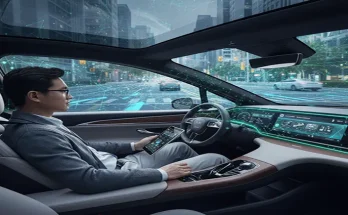
- Maximized Interior Space: The elimination of the engine block, transmission tunnel, and large fuel tanks creates a flat, expansive interior. This space is transformed into flexible, lounge-like cabins that offer reconfigurable seating and far more legroom relative to the vehicle’s external footprint.
- Digital and Sustainable Cabins: Dashboards are becoming minimalist, dominated by large, interactive digital displays. Furthermore, sustainability is driving material selection, with increasing use of recycled plastics, plant-based composites (like flax or hemp fibers), and non-leather vegan interiors, creating an eco-conscious luxury environment.
The future energy-efficient vehicle will be defined by its sleek, wind-cheating exterior, its feather-light frame, and its spacious, software-driven interior, marking a clean break from the aesthetic and engineering constraints of the last century.