
Sculpted by the Wind: Future Automotive Design Trends for Energy-Efficient Vehicles

Sculpted by the Wind: Future Automotive Design Trends for Energy-Efficient Vehicles

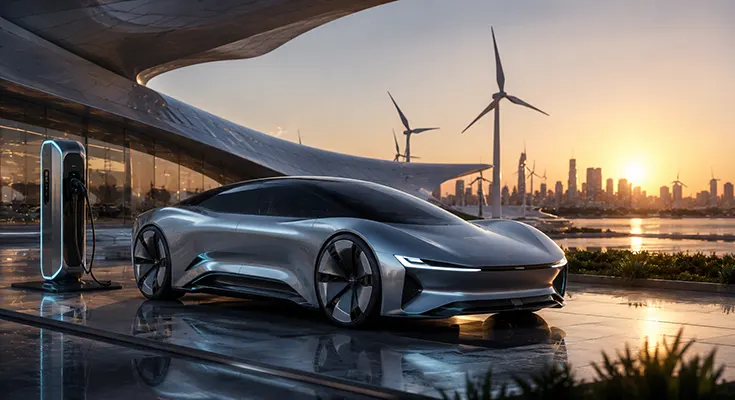
The monumental shift from the internal combustion engine (ICE) to electric powertrains is not just changing what’s under the hood; it’s radically reshaping the entire vehicle. The future of automotive design is being dictated by the immutable laws of physics and economics: to maximize the driving range of an electric vehicle (EV), efficiency is paramount. This singular goal is driving three major future automotive design trends for energy-efficient vehicles: extreme aerodynamic optimization, lightweight multi-material construction, and a complete reimagining of interior space.

1. Extreme Aerodynamic Optimization

Air resistance is the single largest factor limiting an EV’s range at highway speeds, consuming over 50% of the energy. Future designs treat the car as an airfoil, relentlessly sculpted to reduce the drag coefficient ($\text{C}_\text{d}$).

  • Sleek, Monolithic Forms: Traditional grilles, cooling vents, and sharp body creases—necessary for ICE cooling—are disappearing. The trend favors sealed, fluid, and minimalist body shapes that allow air to flow seamlessly from nose to tail.
  • Active Aero Integration: Active aerodynamics are becoming standard. These include adjustable spoilers, rear diffusers, and grille shutters that dynamically open or close. For example, a grille will close at highway speed to reduce drag but open at low speeds for battery cooling, ensuring maximum efficiency under all driving conditions.
  • Minor Drag Reduction: Even minor elements are being redesigned: flush, pop-out door handles, camera-based side “mirrors,” and aerodynamically optimized wheels are all critical in shaving off the small fractions of drag that cumulatively add miles to the range.

2. The Multi-Material Lightweighting Mandate

The heavy battery pack adds significant weight to an EV. To counteract this, future automotive bodies are focusing on lightweight materials to improve the essential power-to-weight ratio, which directly increases efficiency.

  • Carbon Fiber and Advanced Alloys: The industry is moving beyond traditional steel, utilizing multi-material architectures. This involves strategically
Sculpted by the Wind: Future Automotive Design Trends for Energy-Efficient Vehicles Read More
The Intelligent Network: Connected Smart Car Ecosystems and IoT Integration

The Intelligent Network: Connected Smart Car Ecosystems and IoT Integration

The modern vehicle is rapidly evolving from a standalone mode of transport into a sophisticated, mobile node within a vast, interconnected network. This revolution is driven by the integration of the Internet of Things (IoT), forming complex connected smart car ecosystems that leverage real-time data to enhance safety, efficiency, and the overall driving experience. This deep connectivity is the foundational technology enabling the future of smart mobility and autonomous driving.

IoT as the Backbone of V2X Communication

At its core, the connected car functions as a massive sensor gathering data on its own performance and surrounding environment. IoT technology provides the communication channels (often leveraging 5G networks for high speed and low latency) necessary for the vehicle to communicate with everything (V2X).

  • Vehicle-to-Vehicle (V2V): Cars exchange critical data (speed, location, braking status) directly with nearby vehicles. This allows cars to “see” around blind corners or anticipate sudden braking events in ways human drivers or individual sensors cannot, leading to advanced collision avoidance and improved road safety.
  • Vehicle-to-Infrastructure (V2I): Vehicles communicate with smart city elements like traffic lights, road signage, and parking sensors. This integration enables dynamic traffic light algorithms that reduce congestion, real-time alerts about road hazards, and seamless guidance to available parking spaces.
  • Vehicle-to-Cloud (V2C): Data is transmitted to cloud platforms for processing and analytics. This enables over-the-air (OTA) software updates, remote diagnostics, and personalization features, transforming the car into a service platform.

Enhancing Safety and Operational Efficiency

The greatest immediate benefit of this IoT integration is the dramatic improvement in safety and operational performance.

  • Predictive Maintenance: Sensors continuously monitor the health of vehicle components, predicting failures before they occur. The vehicle can alert the driver or the service center for timely intervention, reducing downtime and preventing costly, unexpected breakdowns.
  • Emergency Response: Connected cars can automatically
The Intelligent Network: Connected Smart Car Ecosystems and IoT Integration Read More
The Hydrogen Horizon: Development and Market Potential of Fuel Cell Vehicles

The Hydrogen Horizon: Development and Market Potential of Fuel Cell Vehicles

The push for a zero-emission future has intensified the focus on hydrogen-powered vehicle development as a critical complement to battery-electric technology. Fuel Cell Electric Vehicles (FCEVs), which combine hydrogen with oxygen to produce electricity and emit only water vapor, offer distinct advantages over battery-only systems, particularly in applications demanding long range and rapid refueling. While passenger adoption remains limited, the burgeoning market potential lies in heavy-duty commercial transport and strategic national energy initiatives.

Development: Fuel Cell Technology Breakthroughs

Current FCEV development is concentrated on boosting efficiency, performance, and durability.

  • Enhanced Powertrain Efficiency: Leading manufacturers like Hyundai and Toyota are continually refining their fuel cell stack technology. Newer generations of systems are achieving significant increases in power output and efficiency, leading to higher system output and quicker acceleration. For example, recent models boast driving ranges well over 800 km on a single, quick hydrogen refill, effectively addressing “range anxiety” often associated with electric mobility.
  • Storage Improvements: Hydrogen must be stored at high pressure (700 bar). Advancements in carbon-fiber-reinforced storage tanks are increasing the capacity and energy density of the on-board hydrogen system without compromising cabin space, improving overall vehicle utility.
  • Commercial Vehicle Focus: Recognizing the superior utility of hydrogen for heavy-duty, long-haul transport, manufacturers like Toyota and BMW are strategically shifting their FCEV focus. Trucks, buses, and logistics vehicles require high energy payloads and minimal downtime for refueling—criteria where FCEVs clearly surpass current battery-electric alternatives. BMW, for instance, plans a move into mass-produced hydrogen cars by 2028, specifically targeting heavy-duty use.

Market Potential: The Commercial Driver

The global market for FCEVs is poised for substantial growth, with estimates predicting the market size could reach over $15 billion by 2030, growing at a high Compound Annual Growth Rate (CAGR).This expansion is overwhelmingly driven by the commercial sector.

Vehicle TypeMarket Advantage
Heavy-Duty
The Hydrogen Horizon: Development and Market Potential of Fuel Cell Vehicles Read More
The Road Ahead: Next-Generation Autonomous Driving Technology Advancements

The Road Ahead: Next-Generation Autonomous Driving Technology Advancements

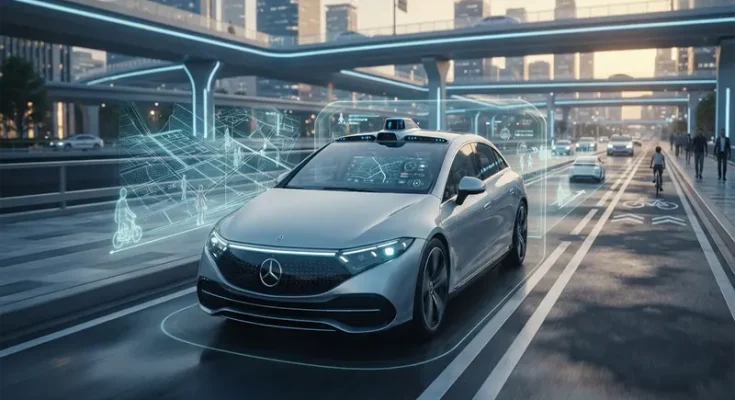
The vision of fully self-driving cars—known as Level 5 autonomy—is being brought closer to reality by relentless next-generation autonomous driving technology advancements. Moving beyond today’s Level 2 driver assistance systems, the future hinges on breakthroughs in sensing, communication, and artificial intelligence, all working in concert to create vehicles that are safer, smarter, and seamlessly integrated into the world around them.

Smarter Sensors: Beyond Sight

The immediate future of autonomy is defined by radically improved perception systems that overcome the limitations of current technology.

  • Next-Gen LiDAR and Terahertz Vision: While current Light Detection and Ranging (LiDAR) provides excellent 3D mapping, new Solid-State LiDAR is driving down costs and improving reliability. An even more significant advancement is the emergence of Terahertz (THz) Vision Sensors. This technology offers resolution up to twenty times higher than conventional radar and promises all-weather, long-range perception, effectively mitigating the common issues of fog, heavy rain, or glare that challenge existing sensor suites.
  • 4D Imaging Radar: Modern radar is evolving into a high-resolution 4D system that can capture the elevation (height) of objects in addition to their range, speed, and azimuth. This leap in detail makes radar a highly effective, redundant sensor, crucial for differentiating between road debris and an overhead sign.
  • Hyper-Fusion Perception: The key to L4 and L5 autonomy is the sophisticated fusion of data from multiple sensor types (cameras, radar, LiDAR). Advanced Sensor Fusion algorithms, powered by deep learning, enable the vehicle to build a unified, high-fidelity, 360-degree model of the environment that is far more reliable than any single sensor input.

The Rise of Cognitive AI and Computing

The “brain” of the next-generation autonomous vehicle must process astronomical amounts of data in real-time to make split-second, human-like decisions.

  • Deep Learning and Neural Networks: AI is moving from simple object recognition to complex
The Road Ahead: Next-Generation Autonomous Driving Technology Advancements Read More
The Charge Ahead: Future Electric Vehicle Innovation and Sustainability Trends

The Charge Ahead: Future Electric Vehicle Innovation and Sustainability Trends

The transition to electric vehicles (EVs) is a cornerstone of global sustainability efforts. Yet, the future electric vehicle innovation is about far more than simply replacing a combustion engine with an electric motor. The industry is currently undergoing a radical evolution, driven by breakthroughs in technology and a deepening commitment to a circular economy, ensuring that e-mobility is truly clean from raw material to road.

The Battery Revolution: Innovation at the Core

Battery technology remains the single most critical factor determining an EV’s performance and sustainability footprint.

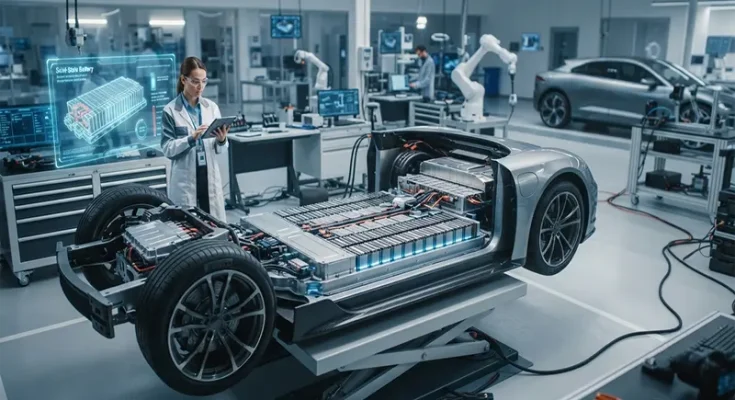
  • Solid-State Batteries: This is the “holy grail” of EV innovation. By replacing the liquid electrolyte with a solid one, solid-state batteries promise a higher energy density (meaning longer range, potentially 50% more), faster charging times (under 10 minutes), and significantly improved safety by eliminating fire risk. Major automakers are aiming for commercial deployment in the latter half of the decade.
  • Alternative Chemistries: To reduce reliance on expensive and geopolitically sensitive materials like cobalt and nickel, manufacturers are embracing chemistries like Lithium Iron Phosphate (LFP) for more affordable, high-volume models. Furthermore, Sodium-ion batteries, which utilize an abundant element, are emerging as a sustainable and cost-effective alternative for shorter-range urban vehicles.
  • Structural Batteries: Integrating the battery pack directly into the vehicle’s chassis simplifies manufacturing, reduces weight, and increases structural integrity, contributing to both efficiency and safety.

Charging and Grid Integration: A Sustainable Network

Future sustainability hinges on how EVs interact with the energy grid.

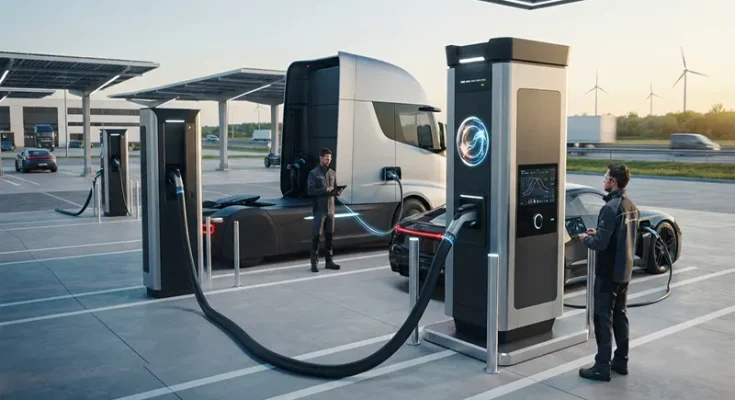
  • Ultra-Fast and Wireless Charging: The deployment of 800-volt architectures and ultra-fast charging stations (350kW+) is dramatically cutting “refueling” time. Meanwhile, wireless (inductive) charging is being tested for both stationary parking and dynamic charging on dedicated road lanes, offering seamless convenience.
  • Vehicle-to-Grid (V2G) Technology: This innovation turns EVs into mobile energy storage units. During peak demand or power outages, V2G
The Charge Ahead: Future Electric Vehicle Innovation and Sustainability Trends Read More