
The Eyes and Ears of Tomorrow: Autonomous Driving Sensor Technology and Safety Features

The Eyes and Ears of Tomorrow: Autonomous Driving Sensor Technology and Safety Features

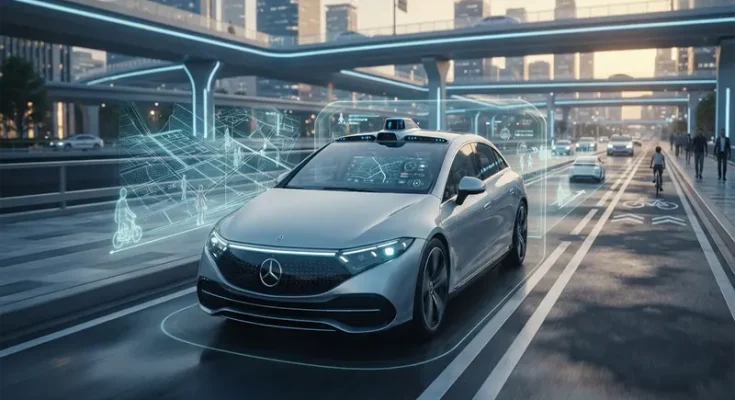
The promise of autonomous driving—vehicles that pilot themselves with minimal or no human intervention—rests entirely on their ability to perceive the world accurately. This capability is delivered by a sophisticated array of sensor technologies that act as the car’s eyes, ears, and sense of distance, directly enabling the advanced safety features that underpin the next generation of road transport.

Key Autonomous Driving Sensor Technologies

Autonomous vehicles (AVs) rely on a combination of different sensor modalities to build a robust, 360-degree understanding of their environment, a process known as Sensor Fusion.

1. Light Detection and Ranging (LiDAR)

LiDAR systems use laser pulses to measure distances, creating a highly detailed, three-dimensional “point cloud” map of the surroundings.

  • Core Function: High-resolution 3D mapping and object shape recognition.
  • Safety Contribution: Provides millimeter-precise localization and obstacle detection (pedestrians, small debris, road contours), which is critical for complex urban driving scenarios and avoiding collisions.
  • Limitation: Performance can degrade significantly in adverse weather conditions like heavy rain, fog, or snow.

2. Radio Detection and Ranging (Radar)

Radar emits radio waves and measures the return time and frequency shift (Doppler effect) to determine the distance, velocity, and angle of objects.

  • Core Function: Long-range detection, speed measurement, and all-weather performance.
  • Safety Contribution: Essential for Adaptive Cruise Control (ACC) and Automatic Emergency Braking (AEB) due to its accurate velocity measurement and reliability in poor visibility (fog, rain, darkness). Modern 4D Imaging Radar is improving resolution to capture elevation, making it even safer.
  • Limitation: Lower resolution than LiDAR, making it less adept at recognizing fine details or object shapes.

3. Cameras (Visual Sensors)

Cameras capture visual data, providing high-resolution color images of the environment.

  • Core Function: Object classification, traffic sign recognition, lane marking detection, and color/texture information.
  • Safety Contribution: Works with Artificial Intelligence (AI) to perform critical tasks like
The Eyes and Ears of Tomorrow: Autonomous Driving Sensor Technology and Safety Features Read More
The Future is Connected: Vehicle-to-Vehicle (V2V) Communication Technology Development

The Future is Connected: Vehicle-to-Vehicle (V2V) Communication Technology Development

The quest for safer roads and reduced traffic congestion is driving the rapid evolution of automotive technology, with Vehicle-to-Vehicle (V2V) communication technology development standing out as a critical game-changer. V2V technology allows cars to wirelessly exchange essential data with one another, creating a dynamic, real-time awareness of the driving environment far exceeding what a single driver or a single car’s sensors can provide. This connectivity is the foundational layer for truly smart, cooperative transportation systems.

How V2V Technology Works

V2V communication relies primarily on short-range, dedicated wireless channels. The primary standards under development are:

  1. Dedicated Short Range Communications (DSRC): This older standard uses a version of Wi-Fi ($802.11\text{p}$) to allow vehicles to broadcast basic safety messages (BSMs)—such as position, speed, heading, and braking status—up to 300 meters, ten times per second. This information is anonymous and encrypted for security.
  2. Cellular Vehicle-to-Everything (C-V2X): This newer, increasingly preferred standard leverages modern cellular networks (4G/5G) for communication. C-V2X offers greater range, higher bandwidth, and lower latency, enabling not just V2V communication but also Vehicle-to-Infrastructure (V2I) and Vehicle-to-Pedestrian (V2P), collectively known as V2X.

Key Developments and Safety Benefits

The development of V2V is centered on providing drivers and automated systems with timely warnings and information to prevent the most common types of accidents.

  • Collision Prevention: V2V can alert a driver to an impending collision even if the other vehicle is out of sight, such as around a blind corner or through a line of traffic. Applications include Intersection Movement Assist (preventing red-light running accidents) and Left Turn Assist (warning against unsafe turns into oncoming traffic).
  • Cooperative Adaptive Cruise Control (C-ACC): Vehicles can communicate to optimize speed and distance not just based on the car immediately ahead, but based on a chain of vehicles. This enables tighter platooning, increasing road capacity and improving fuel efficiency
The Future is Connected: Vehicle-to-Vehicle (V2V) Communication Technology Development Read More
Seamless Driving: Smart Car Infotainment System Upgrades

Seamless Driving: Smart Car Infotainment System Upgrades

The smart car infotainment system has rapidly evolved from a simple radio and CD player into the central nervous system of the modern vehicle. These touchscreen interfaces manage navigation, communication, media, and even vehicle settings. For drivers whose cars might be a few years old or those simply seeking enhanced functionality, smart car infotainment system upgrades offer a gateway to a safer, more connected, and enjoyable driving experience without having to purchase a new vehicle.

The Power of Integration: Apple CarPlay and Android Auto

The most popular and foundational upgrade for many older vehicles is the integration of Apple CarPlay and Android Auto. These platforms mirror the essential functions of your smartphone onto the car’s display, providing immediate access to:

  • Optimized Navigation: Using familiar apps like Google Maps or Waze.
  • Hands-Free Communication: Making calls and sending voice-dictated texts.
  • Streaming Media: Accessing Spotify, podcasts, and audiobooks.

If your existing head unit lacks this capability, upgrading to a modern aftermarket head unit that supports these features is a transformative step. These units are often designed to fit seamlessly into the dashboard and instantly modernize the car’s interior technology.

Expanding Functionality: Advanced Upgrades

Beyond basic smartphone integration, several advanced upgrades can significantly boost the utility and intelligence of your car’s system:

  • Digital Sound Processing (DSP) and Audio Upgrades: A “smart” system isn’t just visual; it’s auditory. Upgrading the amplifier and adding a DSP unit allows for precise tuning and optimization of the sound output, making your media quality vastly superior, regardless of the original speakers.
  • Integration of Advanced Driver Assistance Systems (ADAS): Some modern infotainment systems can serve as the display for auxiliary safety features. This includes integrating high-definition dashcams with the central screen, or adding 360-degree camera systems to older vehicles, using the new head unit as a sophisticated monitor.
  • Over-the-Air
Seamless Driving: Smart Car Infotainment System Upgrades Read More
Maximizing Range and Longevity: Electric Car Battery Efficiency and Maintenance Tips

Maximizing Range and Longevity: Electric Car Battery Efficiency and Maintenance Tips

The battery is the heart of every Electric Vehicle (EV), and its performance dictates both driving range and the vehicle’s long-term value. Understanding electric car battery efficiency and maintenance tips is crucial for EV owners looking to maximize their range and ensure the longevity of this vital, high-tech component. While modern EV batteries are remarkably sophisticated and require less maintenance than internal combustion engines, a few smart habits can significantly enhance their operational life.

The Science of Efficiency

Electric car battery efficiency is measured by how effectively the stored energy is converted into driving power. Factors that commonly degrade efficiency include extreme temperatures and aggressive driving habits.

  • Temperature Management: Lithium-ion batteries perform optimally within a moderate temperature range. High heat is the battery’s biggest enemy, accelerating degradation. Conversely, extreme cold temporarily reduces power and charging efficiency. Modern EVs use sophisticated Battery Thermal Management Systems (BTMS) to regulate temperature, but smart maintenance complements this.
  • Driving Style: Just like gasoline consumption, aggressive acceleration and hard braking diminish efficiency. Utilizing the EV’s regenerative braking system maximizes efficiency by recapturing kinetic energy and returning it to the battery, essentially charging the car as it slows down.

Essential Maintenance Tips for Longevity

Proper charging habits are the most impactful form of battery maintenance.

  1. Avoid Extreme State-of-Charge (SoC): Most manufacturers and battery experts recommend keeping the battery’s charge level between 20% and 80% for daily driving. Consistently charging to $100\%$or letting the charge drop below$20\%$puts unnecessary stress on the cells, accelerating degradation over time.Many EVs allow you to set an upper charging limit for this exact reason.
  2. Minimize DC Fast Charging (DCFC): While convenient for road trips, frequent use of high-power DCFC generates significant heat, which can stress the battery. For daily charging, rely on Level 1 (standard outlet) or Level 2 (home charger) AC charging,
Maximizing Range and Longevity: Electric Car Battery Efficiency and Maintenance Tips Read More
The Road Ahead: Advanced Driver Assistance Systems (ADAS) for Modern Vehicles

The Road Ahead: Advanced Driver Assistance Systems (ADAS) for Modern Vehicles

The modern automotive landscape is rapidly evolving, driven by an increased focus on safety, comfort, and efficiency. At the forefront of this transformation are Advanced Driver Assistance Systems (ADAS). Far from being simple luxuries, these integrated technologies are becoming fundamental components of modern vehicles, acting as a crucial bridge between human drivers and fully autonomous driving. ADAS represents a suite of sophisticated electronic systems designed to assist the driver in navigating, parking, and, most importantly, preventing accidents.

Enhancing Safety Through Intelligent Intervention

The primary mission of ADAS is to reduce the incidence and severity of road accidents. This is achieved through real-time monitoring of the vehicle’s surroundings and intelligent intervention when a critical situation is detected.

One of the most life-saving ADAS features is Automatic Emergency Braking (AEB). Utilizing radar and camera sensors, AEB constantly monitors the distance and speed of vehicles or pedestrians ahead. If the system detects an impending collision and the driver fails to react in time, it will automatically apply the brakes, often mitigating or entirely avoiding a crash. Similarly, Forward Collision Warning (FCW) alerts the driver to a potential impact, providing those critical extra seconds for a human response.

Another cornerstone of safety is Lane Keeping Assist (LKA) and Lane Departure Warning (LDW). LDW warns the driver if the vehicle begins to drift out of its lane without the turn signal being activated, a common cause of highway accidents, especially due to fatigue. LKA goes a step further, subtly steering the vehicle back into the center of its lane.

Easing the Burden of Driving

Beyond collision mitigation, ADAS features significantly reduce driver fatigue and improve the overall driving experience. Adaptive Cruise Control (ACC) is a prime example. Unlike conventional cruise control, ACC uses sensors to maintain a pre-set distance from the vehicle …

The Road Ahead: Advanced Driver Assistance Systems (ADAS) for Modern Vehicles Read More