The transition to electric vehicles (EVs) is a cornerstone of global sustainability efforts. Yet, the future electric vehicle innovation is about far more than simply replacing a combustion engine with an electric motor. The industry is currently undergoing a radical evolution, driven by breakthroughs in technology and a deepening commitment to a circular economy, ensuring that e-mobility is truly clean from raw material to road.
The Battery Revolution: Innovation at the Core
Battery technology remains the single most critical factor determining an EV’s performance and sustainability footprint.
- Solid-State Batteries: This is the “holy grail” of EV innovation. By replacing the liquid electrolyte with a solid one, solid-state batteries promise a higher energy density (meaning longer range, potentially 50% more), faster charging times (under 10 minutes), and significantly improved safety by eliminating fire risk. Major automakers are aiming for commercial deployment in the latter half of the decade.
- Alternative Chemistries: To reduce reliance on expensive and geopolitically sensitive materials like cobalt and nickel, manufacturers are embracing chemistries like Lithium Iron Phosphate (LFP) for more affordable, high-volume models. Furthermore, Sodium-ion batteries, which utilize an abundant element, are emerging as a sustainable and cost-effective alternative for shorter-range urban vehicles.
- Structural Batteries: Integrating the battery pack directly into the vehicle’s chassis simplifies manufacturing, reduces weight, and increases structural integrity, contributing to both efficiency and safety.
Charging and Grid Integration: A Sustainable Network
Future sustainability hinges on how EVs interact with the energy grid.
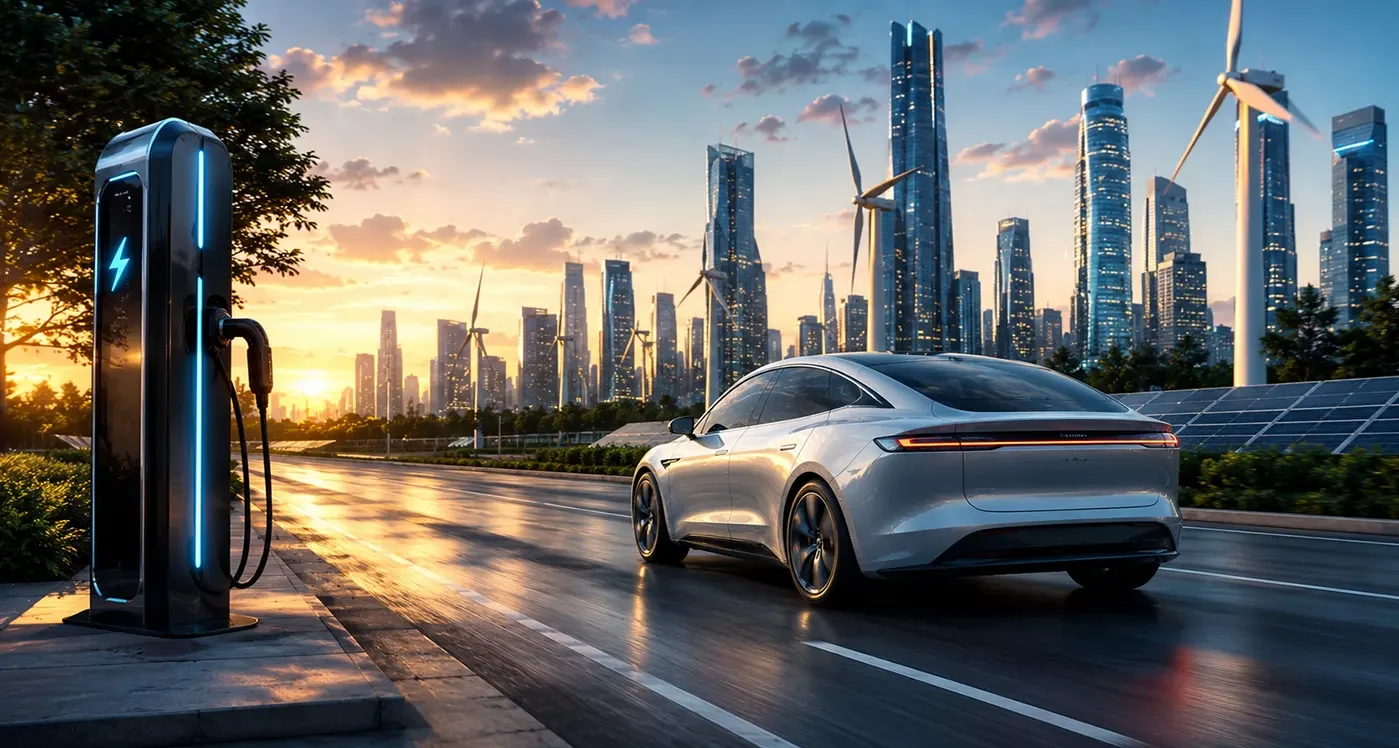
- Ultra-Fast and Wireless Charging: The deployment of 800-volt architectures and ultra-fast charging stations (350kW+) is dramatically cutting “refueling” time. Meanwhile, wireless (inductive) charging is being tested for both stationary parking and dynamic charging on dedicated road lanes, offering seamless convenience.
- Vehicle-to-Grid (V2G) Technology: This innovation turns EVs into mobile energy storage units. During peak demand or power outages, V2G allows the car to supply electricity back to the home or grid, helping utilities manage load, increasing grid stability, and promoting the integration of intermittent renewable energy sources like solar and wind.
The Circular Economy: Beyond Zero Emissions
True sustainability extends beyond the tailpipe to encompass the entire lifecycle of the vehicle.
- Sustainable Sourcing and Manufacturing: Manufacturers are focused on reducing the carbon footprint of battery and vehicle production. This involves using cleaner energy in gigafactories and embracing materials like bio-based and recycled materials for interior components, chassis parts, and wiring harnesses.
- Battery Second Life and Recycling: Once an EV battery loses too much capacity for driving (typically 70-80% of its initial charge), its life is far from over. It can be repurposed (second life) for stationary energy storage in homes or commercial buildings. Finally, advanced direct-to-battery recycling methods are being developed to recover over 95% of the critical materials (lithium, nickel, cobalt) for use in new batteries, creating a crucial closed-loop system and minimizing waste.
The convergence of these innovations—from energy-dense solid-state cells to dynamic charging and a fully circular material loop—is not just making EVs faster and longer-ranging, but fundamentally more sustainable.