
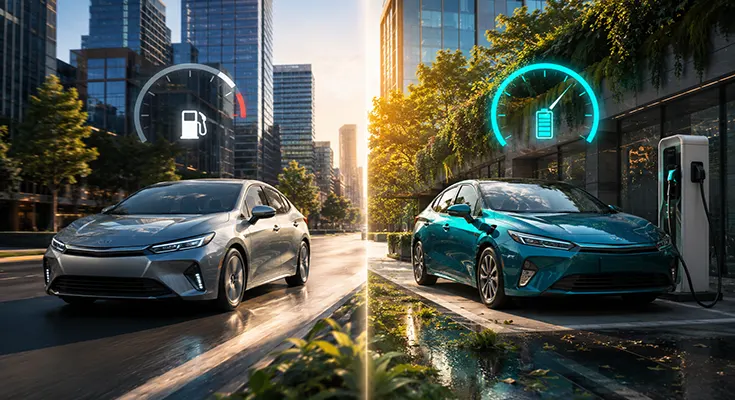
City driving has become the perfect testing ground for modern fuel-efficient vehicles. With stop-and-go traffic, shorter commuting distances, and rising fuel costs, many drivers are now comparing hybrid vehicles and plug-in hybrids to find the best urban transportation solution. While both technologies aim to reduce fuel consumption and emissions, they operate differently and offer distinct advantages depending on driving habits.
This guide explores the pros and cons of hybrid vehicles versus plug-in hybrids specifically for city driving, helping you decide which option fits your lifestyle best.
Understanding the Difference
Before comparing them, it’s important to understand how each system works.
Hybrid Vehicles (HEVs)
Traditional hybrid vehicles combine a gasoline engine with an electric motor. The battery charges automatically through regenerative braking and the gasoline engine itself. Drivers do not need to plug the vehicle into a charger.
Plug-In Hybrid Vehicles (PHEVs)
Plug-in hybrids also use both gasoline and electric power, but they feature larger batteries that can be charged externally using a charging station or home outlet. Most PHEVs can drive short distances entirely on electric power before switching to gasoline.
Advantages of Hybrid Vehicles for City Driving
1. Excellent Fuel Efficiency in Stop-and-Go Traffic
Hybrids perform exceptionally well in urban environments because regenerative braking captures energy during frequent braking situations. This improves fuel economy significantly compared to conventional gasoline vehicles.
In heavy traffic, hybrids often switch between gasoline and electric power seamlessly, reducing fuel consumption.
Best for:
- Daily commuting
- Frequent traffic congestion
- Drivers seeking lower fuel expenses without charging hassles
2. No Charging Required
One of the biggest advantages of standard hybrids is convenience. Drivers never need to search for charging stations or install home charging equipment.
The system manages battery charging automatically, making hybrids easy for apartment residents or drivers without private parking access.
Ideal for:
- Urban residents without garages
- Drivers with unpredictable schedules
- People who prefer simplicity
3. Lower Purchase Price
Traditional hybrids usually cost less than plug-in hybrids because they use smaller batteries and less complex charging hardware.
This lower upfront cost can make hybrids more financially attractive for budget-conscious buyers.
Financial Benefit:
- Lower initial investment
- Reduced insurance costs in some markets
- Lower maintenance complexity
4. Consistent Efficiency Without Charging Dependency
A hybrid remains fuel efficient regardless of whether you have access to charging infrastructure.
Even during long drives or unexpected trips, the vehicle maintains strong efficiency levels.
Disadvantages of Hybrid Vehicles for City Driving
1. Limited Electric-Only Driving
Standard hybrids cannot travel long distances solely on electric power. The gasoline engine activates frequently, even during city commutes.
This means:
- More fuel usage than a plug-in hybrid
- Less reduction in emissions
- Reduced silent EV driving experience
2. Smaller Environmental Benefits
While hybrids reduce emissions compared to traditional gasoline vehicles, they still rely heavily on fossil fuels.
Drivers looking for maximum eco-friendliness may find hybrids less appealing than plug-in options.
3. Less Performance Flexibility
The smaller battery limits electric acceleration and EV functionality. Some drivers may notice less responsiveness compared to advanced plug-in systems.
Advantages of Plug-In Hybrids for City Driving
1. Electric-Only Driving for Daily Commutes
One of the biggest advantages of plug-in hybrids is their ability to drive entirely on electricity for shorter distances.
Many city drivers travel less than the electric range offered by modern PHEVs, meaning they may rarely use gasoline during weekday commuting.
Major Benefits:
- Near-zero fuel use for short trips
- Quiet driving experience
- Reduced urban emissions
2. Lower Fuel Costs
When regularly charged, plug-in hybrids can dramatically reduce gasoline expenses.
Electricity is typically cheaper than gasoline per kilometer traveled, especially for urban commuting.
Savings Increase When:
- Charging at home overnight
- Using renewable electricity
- Driving short daily distances
3. Reduced Emissions
PHEVs produce significantly fewer tailpipe emissions during electric driving.
For environmentally conscious city residents, this can contribute to cleaner urban air quality.
4. Backup Gasoline Engine Removes Range Anxiety
Unlike fully electric vehicles, plug-in hybrids still include a gasoline engine.
This creates flexibility:
- Long road trips remain easy
- No fear of battery depletion
- Charging becomes helpful rather than mandatory
Disadvantages of Plug-In Hybrids for City Driving
1. Higher Purchase Price
Plug-in hybrids typically cost more than standard hybrids due to larger batteries and charging technology.
Although fuel savings may offset costs over time, the initial investment can be substantial.
2. Charging Infrastructure Needed
To maximize benefits, PHEVs require regular charging access.
This may be inconvenient for:
- Apartment residents
- Drivers without private parking
- Areas with limited charging stations
Without charging, a plug-in hybrid may lose much of its efficiency advantage.
3. Heavier Vehicle Weight
Larger batteries add weight, which can reduce efficiency once the electric battery is depleted.
In some situations, a discharged PHEV may become less efficient than a standard hybrid.
4. More Complex Ownership Experience
Drivers must actively manage charging habits to fully benefit from a plug-in hybrid.
Some owners eventually stop charging regularly, turning the vehicle into a heavier, less efficient hybrid.
Which Is Better for City Driving?
The answer depends largely on your daily routine and charging access.
Choose a Hybrid Vehicle If:
- You want maximum convenience
- You lack reliable charging access
- You drive long urban distances regularly
- You prefer lower upfront costs
- You want fuel savings without changing habits
Choose a Plug-In Hybrid If:
- You can charge at home or work
- Your daily commute fits within electric range
- You want lower emissions
- You prioritize electric driving
- You want EV benefits without full EV limitations
Cost Comparison Over Time
Although plug-in hybrids usually cost more initially, city drivers with short commutes may save significantly on fuel over several years.
However, the financial advantage depends heavily on:
- Electricity prices
- Fuel prices
- Charging frequency
- Driving distance
- Government incentives
Drivers who rarely charge their PHEV may not recover the higher purchase price.
Final Thoughts
Both hybrid vehicles and plug-in hybrids are excellent choices for city driving, offering improved fuel efficiency, lower emissions, and smoother urban commuting experiences compared to conventional gasoline cars.
Traditional hybrids excel in simplicity, affordability, and convenience, making them ideal for drivers who want efficiency without lifestyle changes. Plug-in hybrids, on the other hand, provide a stronger electric driving experience and greater fuel savings for those with access to charging infrastructure.
Ultimately, the best choice comes down to your driving habits, budget, and access to charging. Understanding these factors will help you select the vehicle that delivers the greatest value for your city lifestyle.