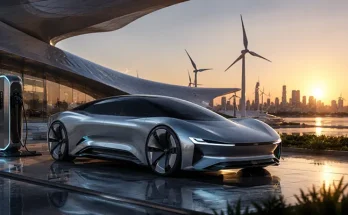
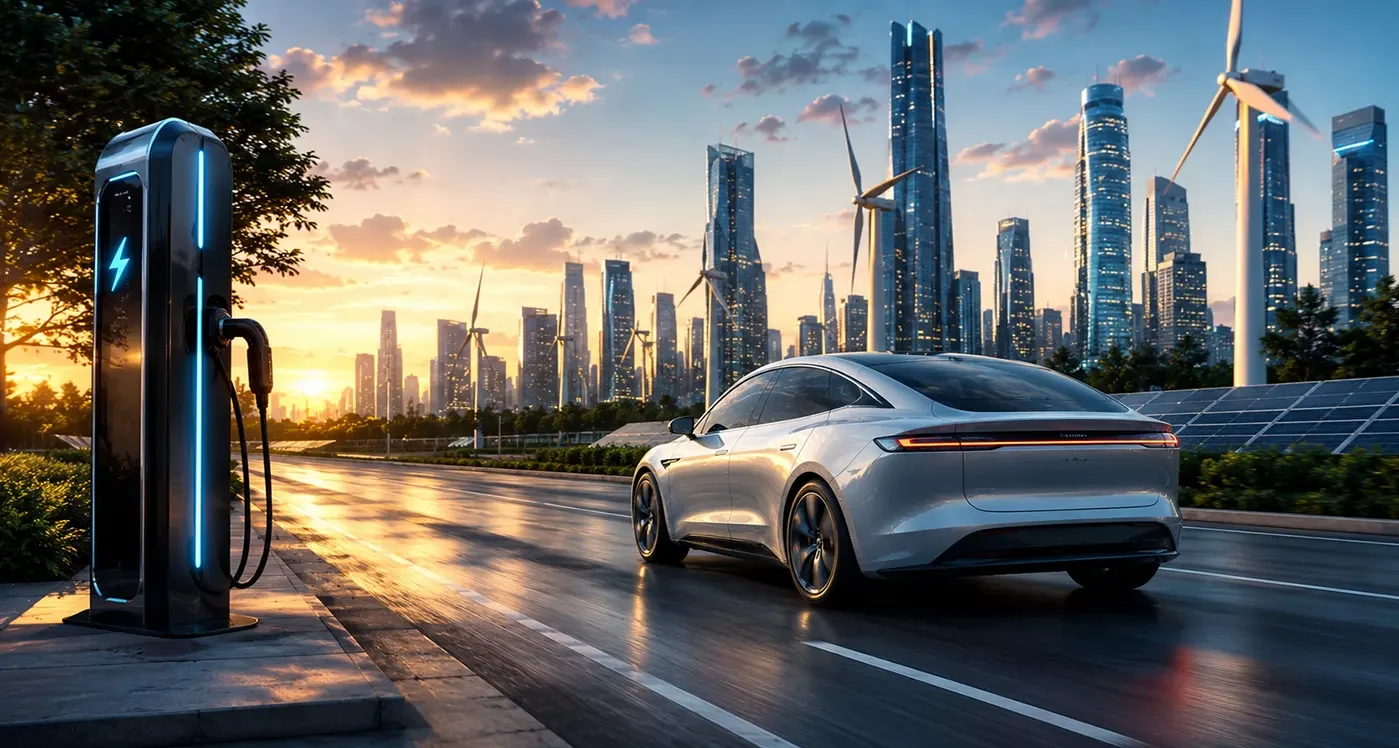
The modern vehicle is rapidly evolving from a standalone mode of transport into a sophisticated, mobile node within a vast, interconnected network. This revolution is driven by the integration of the Internet of Things (IoT), forming complex connected smart car ecosystems that leverage real-time data to enhance safety, efficiency, and the overall driving experience. This deep connectivity is the foundational technology enabling the future of smart mobility and autonomous driving.
IoT as the Backbone of V2X Communication
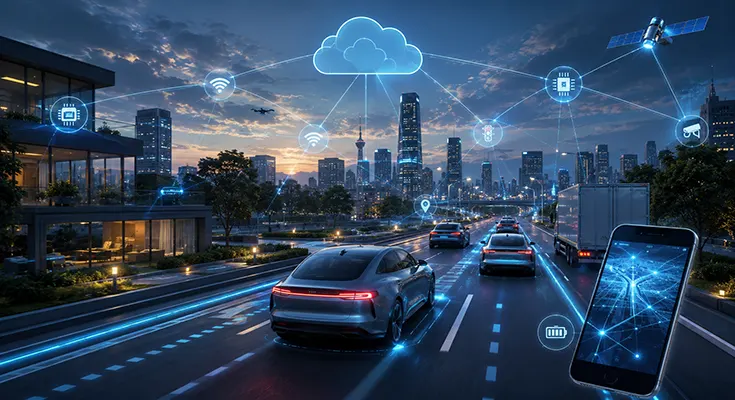
At its core, the connected car functions as a massive sensor gathering data on its own performance and surrounding environment. IoT technology provides the communication channels (often leveraging 5G networks for high speed and low latency) necessary for the vehicle to communicate with everything (V2X).
- Vehicle-to-Vehicle (V2V): Cars exchange critical data (speed, location, braking status) directly with nearby vehicles. This allows cars to “see” around blind corners or anticipate sudden braking events in ways human drivers or individual sensors cannot, leading to advanced collision avoidance and improved road safety.
- Vehicle-to-Infrastructure (V2I): Vehicles communicate with smart city elements like traffic lights, road signage, and parking sensors. This integration enables dynamic traffic light algorithms that reduce congestion, real-time alerts about road hazards, and seamless guidance to available parking spaces.
- Vehicle-to-Cloud (V2C): Data is transmitted to cloud platforms for processing and analytics. This enables over-the-air (OTA) software updates, remote diagnostics, and personalization features, transforming the car into a service platform.
Enhancing Safety and Operational Efficiency
The greatest immediate benefit of this IoT integration is the dramatic improvement in safety and operational performance.
- Predictive Maintenance: Sensors continuously monitor the health of vehicle components, predicting failures before they occur. The vehicle can alert the driver or the service center for timely intervention, reducing downtime and preventing costly, unexpected breakdowns.
- Emergency Response: Connected cars can automatically send SOS signals to emergency services after an accident, providing precise location, impact severity, and potentially even medical information about the occupants, drastically reducing response times.
- Fleet Management: In commercial transport, IoT enables fleet managers to optimize routing, monitor fuel consumption, track cargo condition, and analyze driver behavior in real-time, leading to improved logistics and significant cost savings.
The Personalized and Integrated Experience
Beyond safety and logistics, the connected car ecosystem extends into the driver’s personal digital life. Integration with smart home systems allows the car to act as a remote control—turning on the home thermostat or opening the garage door as the driver approaches.
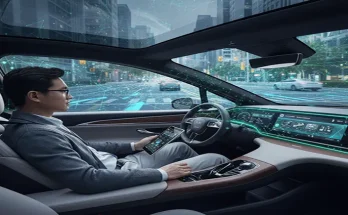
In-vehicle infotainment systems, powered by the cloud, offer personalized content, navigation based on real-time traffic data, and voice-activated controls. This level of seamless connectivity turns the car cabin into a truly customized and productive digital space.
Challenges and the Future
Despite the immense potential, the expansion of the connected car ecosystem faces hurdles, primarily in cybersecurity and data privacy. As vehicles become fully software-defined, protecting these complex networks from malicious attacks is paramount. Furthermore, robust data governance is necessary to manage the vast amount of location and behavioral data generated by these smart vehicles.
Ultimately, the connected smart car ecosystem is a vital component of the future Smart City, promising a unified, intelligent, and highly efficient global transportation system.