
The modern automotive landscape is rapidly evolving, driven by an increased focus on safety, comfort, and efficiency. At the forefront of this transformation are Advanced Driver Assistance Systems (ADAS). Far from being simple luxuries, these integrated technologies are becoming fundamental components of modern vehicles, acting as a crucial bridge between human drivers and fully autonomous driving. ADAS represents a suite of sophisticated electronic systems designed to assist the driver in navigating, parking, and, most importantly, preventing accidents.
Enhancing Safety Through Intelligent Intervention
The primary mission of ADAS is to reduce the incidence and severity of road accidents. This is achieved through real-time monitoring of the vehicle’s surroundings and intelligent intervention when a critical situation is detected.
One of the most life-saving ADAS features is Automatic Emergency Braking (AEB). Utilizing radar and camera sensors, AEB constantly monitors the distance and speed of vehicles or pedestrians ahead. If the system detects an impending collision and the driver fails to react in time, it will automatically apply the brakes, often mitigating or entirely avoiding a crash. Similarly, Forward Collision Warning (FCW) alerts the driver to a potential impact, providing those critical extra seconds for a human response.
Another cornerstone of safety is Lane Keeping Assist (LKA) and Lane Departure Warning (LDW). LDW warns the driver if the vehicle begins to drift out of its lane without the turn signal being activated, a common cause of highway accidents, especially due to fatigue. LKA goes a step further, subtly steering the vehicle back into the center of its lane.
Easing the Burden of Driving
Beyond collision mitigation, ADAS features significantly reduce driver fatigue and improve the overall driving experience. Adaptive Cruise Control (ACC) is a prime example. Unlike conventional cruise control, ACC uses sensors to maintain a pre-set distance from the vehicle ahead, automatically speeding up and slowing down with the flow of traffic. This feature is invaluable in stop-and-go highway conditions, turning a stressful commute into a more relaxed journey.
For urban environments, Blind Spot Monitoring (BSM) is essential. It uses sensors to detect vehicles in the driver’s blind spot and alerts the driver, typically with a visual signal on the side mirror, before a lane change is initiated. Parking is also made simpler with Rear Cross-Traffic Alert (RCTA), which warns of approaching vehicles when reversing out of a parking spot, and sophisticated Parking Assist systems that can take control of the steering wheel to guide the car into a space.
The Future of Driving
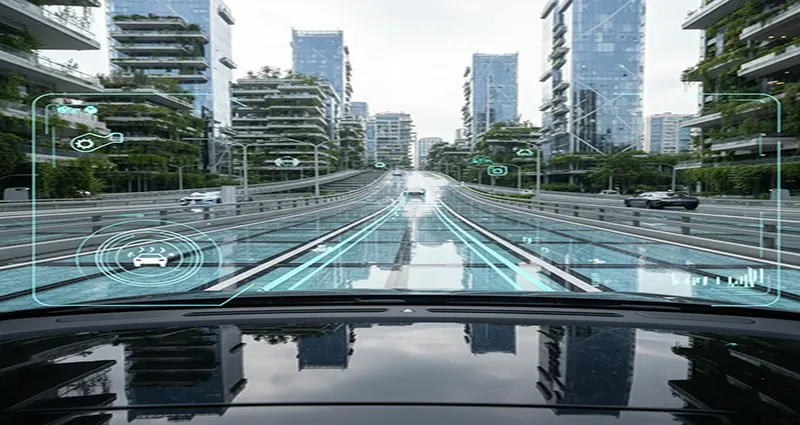
The integration of ADAS relies heavily on a complex network of sensors—including cameras, radar, and lidar—and powerful on-board processing units. As these technologies become more refined and affordable, ADAS will continue its rapid evolution. We are witnessing the fusion of many individual systems into cohesive, highly automated driving functions, paving the way for Level 3 and Level 4 autonomous driving.
ADAS is fundamentally reshaping the relationship between driver and machine. It is transitioning the role of the driver from a sole operator to a supervisor who is constantly backed up by an intelligent electronic co-pilot. For modern vehicles, ADAS is no longer optional; it is the standard for safety and the foundational stepping stone to a smarter, safer, and ultimately autonomous future on the road.