

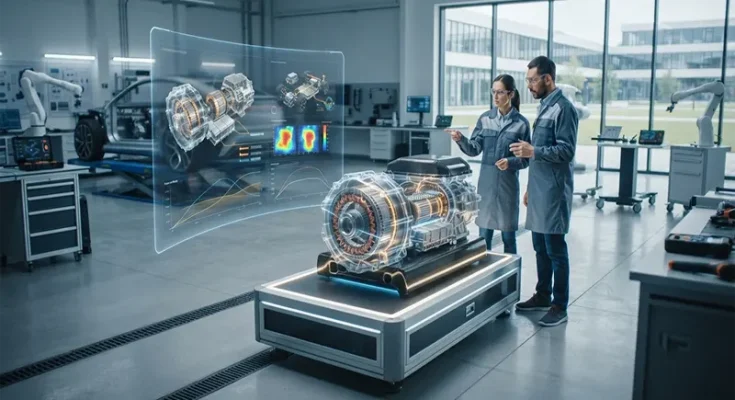
Next-Gen Electric Vehicle Motor and Powertrain Efficiency Advancements

Next-Gen Electric Vehicle Motor and Powertrain Efficiency Advancements

Early electric vehicle (EV) adoption focused heavily on raw battery capacity (kWh) and brute-force range extension. However, the next frontier of sustainable mobility relies entirely on powertrain efficiency. Squeezing every fraction of a percent out of electric motors, power electronics, and transmissions has become the true key to unlocking lighter, more affordable, and ultra-efficient electric vehicles.

As the automotive sector matures, optimizing how electrical energy is converted into physical motion dictates the future performance ceiling of next-generation EVs.

Core Powertrain Innovations Driving Efficiency

The rapid evolution of electric powertrains rests on three critical technological breakthroughs that are fundamentally altering vehicle architecture:

1. Wide-Bandgap Semiconductors (SiC and GaN Inverters)

The inverter acts as the brain and valve of the electric powertrain, converting DC battery power into AC drive current. Traditional silicon-based inverters suffer from high thermal and switching losses, particularly at high frequencies.

  • Silicon Carbide (SiC) and Gallium Nitride (GaN):

Next-Gen Electric Vehicle Motor and Powertrain Efficiency Advancements Read More
Impact of Domestic Price Wars on the Chinese Automotive Industry

Impact of Domestic Price Wars on the Chinese Automotive Industry

Years of aggressive, relentless discounting have transformed China’s domestic car market into an ultra-competitive “red ocean,” fundamentally reshaping the world’s largest automotive ecosystem. What began as a strategic bid to capture market share and accelerate electric vehicle (EV) adoption has evolved into a high-stakes endurance test.

This prolonged price war presents a powerful paradox: while it successfully accelerated consumer adoption and drove massive technological iteration, it has severely compressed profit margins, triggered heavy financial strain, and forced a structural reckoning across the entire manufacturing supply chain.

The Anatomy and Economics of the Price War

The prolonged discounting cycle has fundamentally altered the financial and operational reality of building cars in China. Three core consequences define this transformation:

1. Severe Margin Compression and Financial Strain

For years, automakers prioritized top-line volume growth over bottom-line health, slashing vehicle prices by thousands of dollars to outmaneuver rivals.

  • Unsustainable Economics: As net profit margins
Impact of Domestic Price Wars on the Chinese Automotive Industry Read More