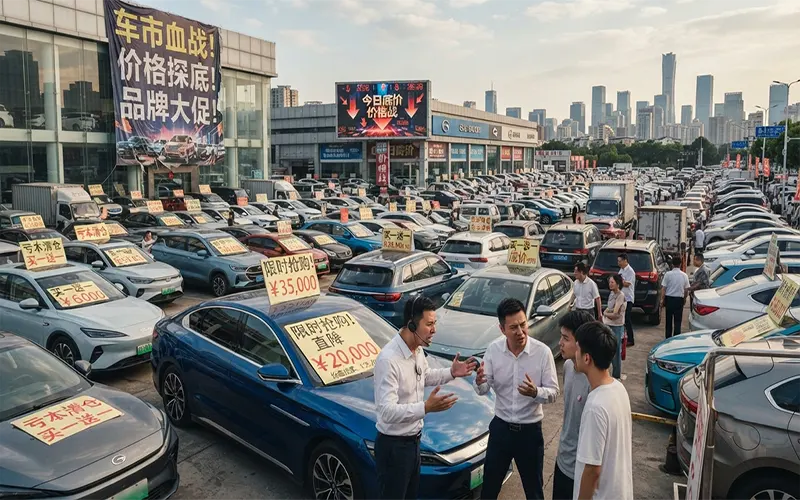
Years of aggressive, relentless discounting have transformed China’s domestic car market into an ultra-competitive “red ocean,” fundamentally reshaping the world’s largest automotive ecosystem. What began as a strategic bid to capture market share and accelerate electric vehicle (EV) adoption has evolved into a high-stakes endurance test.
This prolonged price war presents a powerful paradox: while it successfully accelerated consumer adoption and drove massive technological iteration, it has severely compressed profit margins, triggered heavy financial strain, and forced a structural reckoning across the entire manufacturing supply chain.
The Anatomy and Economics of the Price War
The prolonged discounting cycle has fundamentally altered the financial and operational reality of building cars in China. Three core consequences define this transformation:
1. Severe Margin Compression and Financial Strain
For years, automakers prioritized top-line volume growth over bottom-line health, slashing vehicle prices by thousands of dollars to outmaneuver rivals.
- Unsustainable Economics: As net profit margins plunged to razor-thin or negative percentages across a vast portion of the sector, top-line sales growth failed to cover escalating research and development (R&D) outlays, warranty provisions, and raw material costs.
- The Profitability Divide: Industry analyses indicate that only a small fraction of domestic brands consistently turn a profit on their domestic operations, leaving the rest heavily reliant on external capital or parent-group subsidies to stay afloat.
2. Acceleration of Market Consolidation and the “Survival of the Fittest”
The race to the bottom has exposed a widening chasm between dominant market leaders and smaller, cash-strapped competitors.
- Concentration of Power: Scale has become the ultimate shield. Top-tier manufacturers command an overwhelming majority of total market volume, squeezing out fringe players.
- The Threat of Extinction: Smaller startups and legacy joint ventures unable to sustain years of margin erosion face imminent risks of bankruptcy, forced restructuring, or absorption by larger conglomerates, radically accelerating industry consolidation.
3. Regulatory Pushback and the Shift from Chaos to Value
Recognizing the destructive nature of sub-cost selling, regulatory bodies and industry associations have increasingly stepped in to curb “irrational competition”.
- Promoting Healthy Competition: Authorities have urged automakers to avoid false advertising, safeguard product quality, and abandon below-cost pricing strategies.
- Focusing on Structural Value: This regulatory nudge, coupled with natural market saturation, is steering companies away from destructive price-slashing and back toward competing on core technological differentiation, safety, and brand value.
The Global Spillover: Export Waves and International Expansion
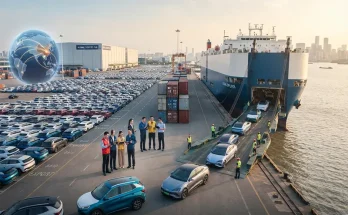
Constrained domestic profitability and steep overcapacity have acted as powerful catalysts for a massive international export surge.
With local margins squeezed to the limit, Chinese automakers have aggressively looked outward to preserve revenue streams, flooding markets across Europe, Southeast Asia, Latin America, and the Middle East with competitively priced vehicles. While this global expansion has established Chinese brands as formidable international players, it has simultaneously provoked rising trade friction, stricter tariff scrutiny, and anti-subsidy investigations in key Western markets. In response, leading exporters are rapidly shifting toward localized manufacturing and regional supply chains to bypass geopolitical barriers.
Responding to the New Normal: Strategic Pivots for Automakers
To survive the post-price-war era, surviving automakers are abandoning pure discounting in favor of multi-layered value creation:
- Monetizing Software and AI: Shifting focus toward advanced driver assistance systems (ADAS), smart cockpit ecosystems, and over-the-air (OTA) subscription services.
- Portfolio Diversification: Balancing pure EV strategies with extended-range electric vehicles (EREVs) and plug-in hybrid electric vehicles (PHEVs) to match shifting consumer demand patterns.
The legacy of China’s automotive price war will be remembered as a brutal yet effective crucible. By weeding out unsustainable players and forcing rapid innovation, it has accelerated the maturation of the world’s most dynamic mobility market. As the industry moves past raw discounting, the future belongs to financially resilient enterprises that master technological depth, global localization, and sustainable value creation.