
Early electric vehicle (EV) adoption focused heavily on raw battery capacity (kWh) and brute-force range extension. However, the next frontier of sustainable mobility relies entirely on powertrain efficiency. Squeezing every fraction of a percent out of electric motors, power electronics, and transmissions has become the true key to unlocking lighter, more affordable, and ultra-efficient electric vehicles.
As the automotive sector matures, optimizing how electrical energy is converted into physical motion dictates the future performance ceiling of next-generation EVs.
Core Powertrain Innovations Driving Efficiency
The rapid evolution of electric powertrains rests on three critical technological breakthroughs that are fundamentally altering vehicle architecture:
1. Wide-Bandgap Semiconductors (SiC and GaN Inverters)
The inverter acts as the brain and valve of the electric powertrain, converting DC battery power into AC drive current. Traditional silicon-based inverters suffer from high thermal and switching losses, particularly at high frequencies.
- Silicon Carbide (SiC) and Gallium Nitride (GaN): The widespread integration of wide-bandgap semiconductors has revolutionized inverter efficiency. SiC and GaN power modules handle vastly higher voltages and switching frequencies with minimal energy loss.
- Size and Weight Reduction: Because these materials generate significantly less heat, the inverters themselves can be shrunk drastically, reducing overall powertrain mass while maintaining high-voltage stability (such as 800V and 1000V systems).
2. Advanced Motor Topologies and Rare-Earth Reductions
Electric motor design has shifted away from generalized architectures toward highly optimized, high-density topologies designed to maximize output while mitigating supply-chain vulnerabilities.
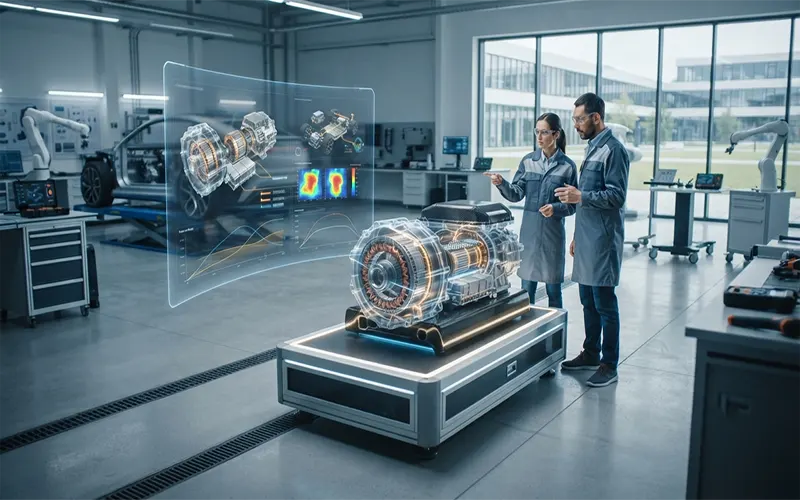
- High-Efficiency Permanent Magnet and Induction Designs: Utilizing advanced soft magnetic alloys and precision hairpin copper windings increases slot fill factors, drastically lowering electrical resistance and core losses.
- Rare-Earth-Free Innovations: Driven by cost and geopolitical factors, manufacturers are increasingly developing advanced externally excited synchronous motors (EESM) and next-gen induction setups that match the efficiency of permanent magnet motors without relying on scarce rare-earth elements.
3. Multi-Speed Transmissions and Integrated “3-in-1” Axle Units
Moving beyond traditional single-speed gearboxes, powertrain packaging has entered a phase of extreme mechanical integration.
- Compact e-Axles: Modern architectures fuse the motor, inverter, and multi-speed or optimized single-speed reduction gearbox into a single, highly cohesive “3-in-1” unit.
- Optimized Efficiency Maps: Multi-speed transmissions allow high-performance and heavy-duty EVs to keep electric motors operating within their narrow peak-efficiency sweet spots across both low-speed city driving and high-speed highway cruising.
Thermal Management and Energy Recovery Synergy
Maximizing powertrain efficiency requires treating thermal and electrical management as a unified ecosystem.
- Advanced Thermal Architectures: Next-gen EVs leverage intelligent heat pumps, multi-way coolant valves, and waste-heat recovery loops. These systems harvest thermal energy from the inverter and motor to warm the cabin or condition the battery pack in cold weather.
- Mitigating Parasitic Drain: By maintaining optimal operating temperatures under heavy loads, these thermal networks prevent thermal throttling, protect system longevity, and drastically reduce parasitic energy drain on the battery.
Real-World Impact: Translating Efficiency into Consumer Value
These compounding powertrain advancements translate directly into tangible consumer and manufacturer benefits:
- Lighter, Cheaper Packs: Higher efficiency means vehicles can travel further on fewer kilowatt-hours, enabling automakers to downsize physical battery pack footprints without sacrificing range.
- Accelerated Charging and Lower Costs: Reduced electrical resistance and lower operating temperatures streamline ultra-fast charging capabilities while lowering long-term operating costs per mile.
Next-generation electric vehicle powertrains represent a masterclass in multidisciplinary engineering. By converging wide-bandgap semiconductors, advanced motor magnetics, and tight mechanical-thermal integration, the automotive industry is successfully eliminating range anxiety through smart design rather than sheer battery bulk—paving the way for a truly sustainable future of transport.