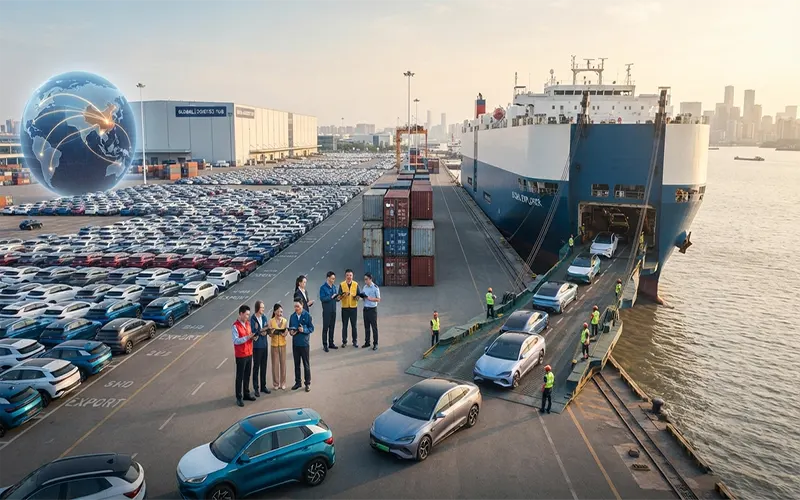
1. The Global Automotive Shift
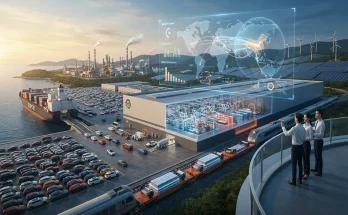
Chinese electric vehicle (EV) manufacturers have rapidly transitioned from domestic market leaders into formidable global competitors. Propelled by surging export volumes and record-breaking overseas shipments, major automotive groups—such as BYD, Geely, NIO, and SAIC—are challenging legacy Western, Japanese, and Korean brands across Europe, Southeast Asia, Latin America, and the Middle East.
Driven by integrated supply chain infrastructure, aggressive software-hardware innovation, and adaptable regional strategies, Chinese EV brands are fundamentally reshaping the worldwide automotive landscape.
2. The Pillars of Competitiveness: Cost, Supply Chain, and Innovation
The rapid international ascent of Chinese automakers is not accidental; it is the result of decades of strategic state-backed development, structural advantages, and unmatched industrial execution.
- Vertical Integration: Chinese manufacturers retain a high degree of control over critical supply chain touchpoints—from upstream lithium refining and raw mineral processing to in-house battery cell production and final assembly. This mastery significantly reduces input costs.
- Battery Dominance: Holding a dominant global market share in advanced cell chemistries (such as high-performance LFP and next-generation solid-state pathways), these brands secure the world’s most cost-effective and energy-dense battery packs.
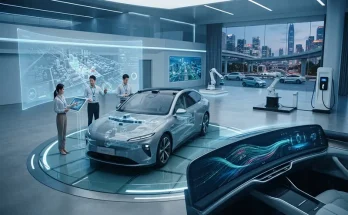
- Rapid Technology Iteration: Moving far beyond competing on price alone, Chinese EVs leverage advanced smart-cabin technologies, lidar configurations, high-performance infotainment systems, and competitive semi-autonomous driving features into standard packages.
3. Navigating International Markets: Regional Strategies
Different geographic regions require tailored market entry strategies, which Chinese brands have executed with remarkable agility.
- Europe as a Quality Benchmark: To combat skepticism, brands have targeted rigorous international safety validations, securing five-star Euro NCAP ratings and positioning models directly against legacy premium and mainstream competitors.
- Rapid Growth in Emerging Markets: In regions with lower market saturation—such as Southeast Asia, Latin America, and South Asia—affordable, tech-forward Chinese EVs are capturing significant market share. In several key emerging economies, Chinese models make up the vast majority of total EV sales, backed by favorable trade frameworks and dealer networks offering strong profit margins.
- The Global South and Regional Hubs: Companies are utilizing localized distribution networks and trade corridors (such as manufacturing and assembly hubs in Egypt for the Middle East/Africa or Central Asia) to streamline regional supply lines.
4. Regulatory Roadblocks, Tariffs, and Geopolitical Hurdles
Rapid global expansion has inevitably triggered protectionist responses and complex regulatory friction.
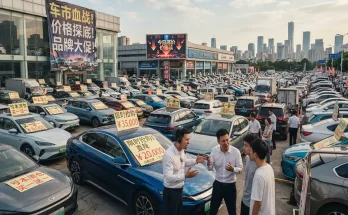
- Tariffs and Trade Defenses: In response to surging import numbers, international bodies and governments—most notably the European Union and North American markets—have introduced countervailing duties and trade restrictions designed to safeguard domestic automotive manufacturing.
- Data Security and Privacy Compliance: Exported vehicles are heavily packed with connected cameras, sensors, and AI-driven software suites. Consequently, brands must navigate strict overseas data governance frameworks to ensure consumer privacy and regulatory approval.
- The Pivot to Local Manufacturing: To circumvent import tariffs and trade barriers, leading Chinese automakers are increasingly investing in localized overseas production plants. Establishing regional factories in Europe, Southeast Asia, and the Americas allows brands to source components locally, satisfy regional content rules, and insulate themselves from geopolitical trade shifts.
5. The Response of Legacy Automakers
The aggressive expansion of Chinese EV brands has fundamentally disrupted the product timelines and strategic thinking of traditional global automakers.
- The Scramble for Affordability: Legacy companies that historically focused on high-margin luxury or mid-tier internal combustion vehicles are racing to re-engineer their pipelines, desperately trying to develop profitable, low-cost entry-level EVs that can compete with Chinese cost structures.
- Strategic Partnerships and Platform Sharing: Recognizing the speed gap in software integration and EV architecture development, several Western and traditional giants have pursued joint ventures or licensed platforms from Chinese tech and auto groups to compress their own research cycles.
The global expansion of Chinese electric vehicle brands represents a permanent structural transformation in international trade and mobility. As these companies transition from pure exporters to localized global manufacturers, they are redefining consumer expectations around automotive pricing, digital features, and clean technology. The next decade of the global auto industry will be defined by how effectively legacy competitors adapt to this high-speed, highly integrated new normal.