The global automotive market has long moved past simple electric vehicle (EV) electrification. Today, the epicenter of software-defined and AI-driven mobility has decisively shifted toward China. The modern vehicle rolling out of Chinese manufacturing hubs is no longer viewed merely as a mechanical transportation machine, but rather as a high-performance “physical AI” device and a deeply integrated digital living space.
Driven by intense domestic competition and rapid consumer tech adoption, Chinese automakers and cross-over tech giants are completely redefining what cars can do, how they are built, and how they interact with users.
Core Technological Breakthroughs Shaping the Market
The rapid modernization of China’s automotive sector rests on three fundamental technology pillars that are setting new benchmarks for the global supply chain:
1. Agentic AI and Next-Gen Smart Cockpits
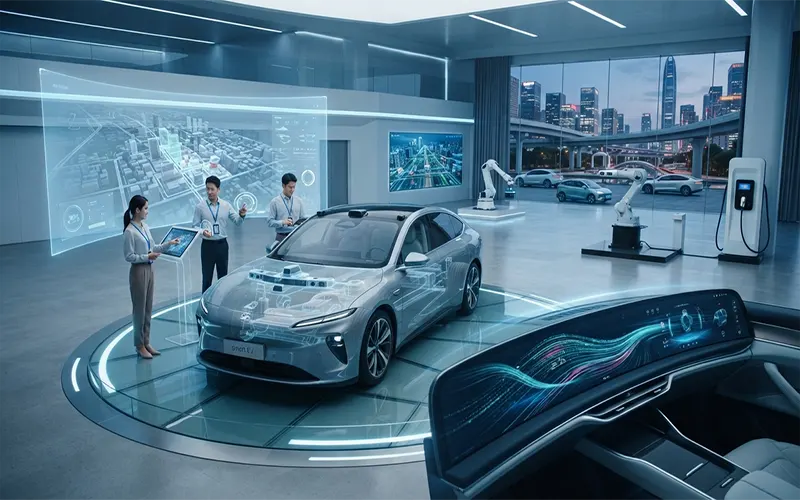
The automotive cockpit has evolved far beyond basic touchscreen interfaces and static voice commands. Powered by localized Large Language Models (LLMs) and advanced multi-agent systems—such as Huawei’s HarmonySpace and Xiaomi’s HyperOS—cabins now act as proactive, conversational assistants.
- Proactive Personalization: Rather than waiting for explicit commands, AI agents analyze real-time context, biometric data, and environmental cues to adjust climate control, anticipate route preferences, and manage media.
- Multimodal Ecosystems: These systems use deep learning to understand natural conversational nuances, hand gestures, and gaze tracking, turning the dashboard into a fluid, adaptive interface.
2. High-Performance ADAS and End-to-End Autonomous Driving
Advanced Driver Assistance Systems (ADAS) in China have transitioned rapidly from highway-only assistants to complex urban environments.
- Urban and Highway NOA: Features like Navigation on Autopilot (NOA) and advanced memory parking are seeing widespread, high-density consumer adoption.
- World Models and High-Density Sensor Fusion: Leveraging millions of real-world driving miles processed through advanced “World Models”, autonomous driving architectures combine high-performance LiDAR (led by domestic innovators like Hesai and Huawei) with massive computational domain controllers exceeding thousands of TOPS (Tera Operations Per Second). This enables vehicles to navigate chaotic urban street layouts safely with minimal driver intervention.
3. Cockpit-Drive Integration and Electronic Architecture Evolution
To handle massive computational workloads efficiently, the underlying electrical/electronic (E/E) architecture of Chinese smart vehicles is undergoing a major structural overhaul.
- Centralized Computing: Legacy distributed electronic control units (ECUs) are being replaced by centralized domain controllers that merge cockpit infotainment, automated driving, and vehicle gateways into unified computing blocks.
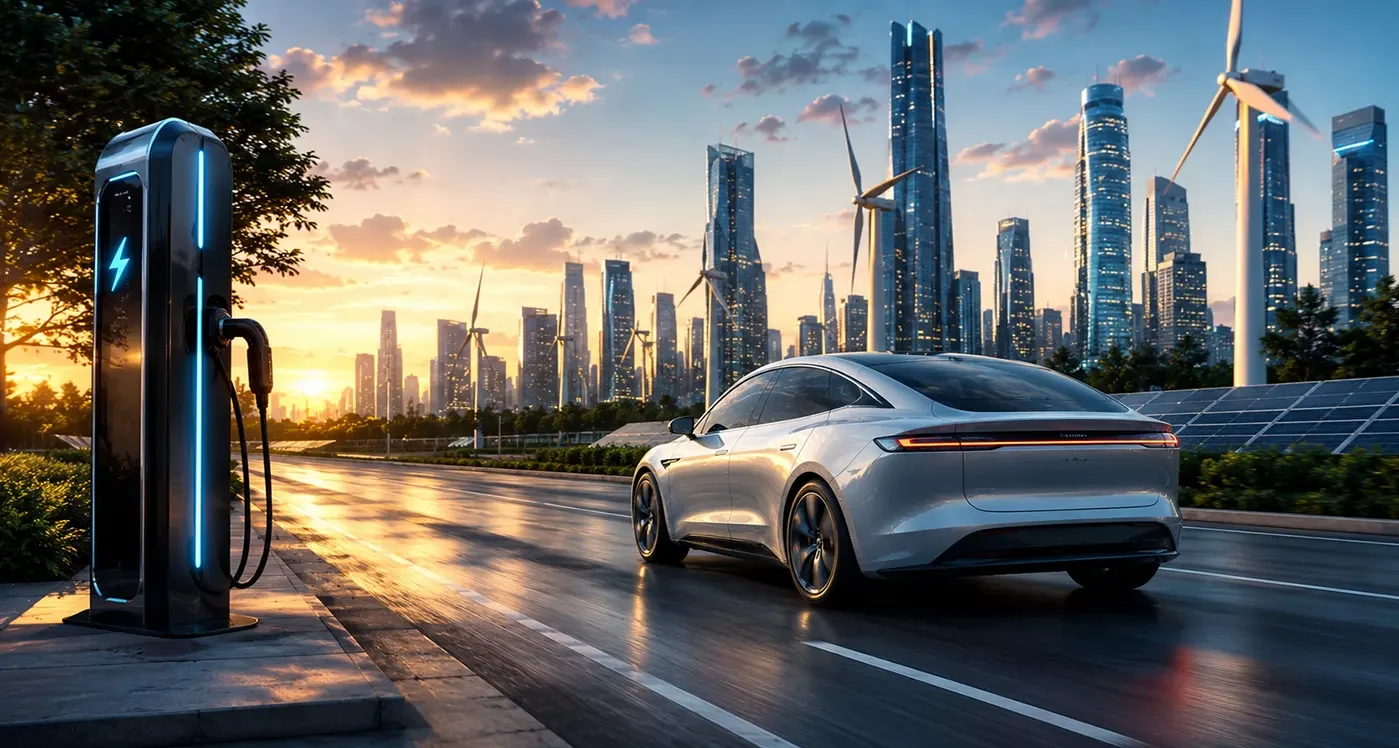
- Ultra-Fast Charging Infrastructure: Alongside intelligence, hardware efficiency has soared, with production-ready 800V and 1000V high-voltage platforms and advanced flash-charging battery chemistries capable of replenishing massive ranges in under ten minutes.
The Rise of Consumer Electronics Giants in Automotive Ecosystems
One of the most disruptive trends in the Chinese market is the direct entry of consumer electronics giants—exemplified by Huawei’s smart car solutions (HIMA model) and Xiaomi’s automotive division.
These tech giants possess a distinct competitive advantage: they treat the car as the ultimate mobile smart device. By seamlessly linking smartphones, tablets, wearable devices, and smart home appliances into a continuous cloud ecosystem, they offer an interoperability standard that legacy automotive companies struggle to match. A user can control home security systems from the driver’s seat, seamlessly transfer media navigation from a phone to the central console, or use a tablet to manage rear-cabin comfort settings.
Global Implications and Localization Strategies
The rapid pace of Chinese smart vehicle innovation has sent shockwaves through legacy international automakers. Global brands long dominant in the region—such as Volkswagen, Toyota, and General Motors—are facing immense pressure.
To stay competitive, these legacy players are abandoning top-down global software strategies in favor of “in China, for China” paradigms. This involves forging deep partnerships with local tech titans and software houses to fast-track localized infotainment, voice recognition, and advanced driving assistance systems tailored specifically to Chinese digital preferences and road environments.
China’s intelligent vehicle revolution has transformed the automobile into a fast-evolving consumer tech platform. By pioneering breakthroughs in agentic AI, end-to-end autonomous driving, lightning-fast charging, and cross-device ecosystem integration, the Chinese automotive industry is establishing a blueprint that will dictate the future trajectory of global mobility for decades to come.