AI Autonomous Driving Technology Advancements in Electric Cars

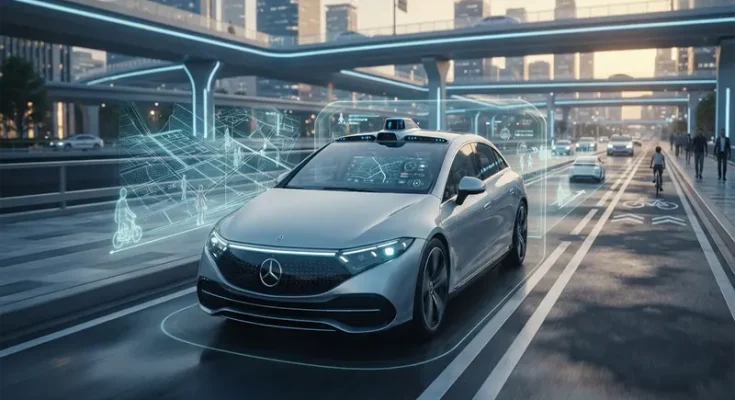
AI Autonomous Driving Technology Advancements in Electric Cars

The marriage of electric vehicles (EVs) and artificial intelligence has crossed a critical inflection point. The automotive sector has pivoted away from viewing EVs purely through the lens of raw powertrain electrification, establishing vehicle intelligence and software-defined autonomy as the ultimate drivers of market value.

Electric vehicles serve as the ideal native host for high-performance AI compute. Unlike legacy internal combustion engine (ICE) platforms, battery-electric architectures feature stable, high-voltage power supplies capable of handling massive computational loads, alongside precise, millisecond-level torque vectoring and brake-by-wire mechanics required for safe autonomous execution.

Core AI Advancements Driving Modern Autonomous EVs

The rapid scaling of the broader AI ecosystem has dismantled years of technological bottlenecks, introducing breakthroughs that redefine how cars navigate the physical world:

1. Vision-Language-Action (VLA) Models and End-to-End Neural Networks

Traditional autonomous driving relied heavily on rigid, human-coded rulebooks that often faltered in chaotic or edge-case environments. Today, the industry has …

AI Autonomous Driving Technology Advancements in Electric Cars Read More
Latest Smart Technology Innovations in the Chinese Automotive Industry

Latest Smart Technology Innovations in the Chinese Automotive Industry

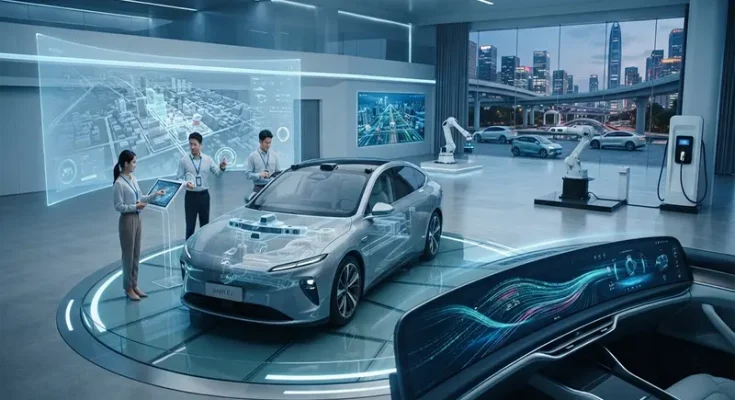
The global automotive market has long moved past simple electric vehicle (EV) electrification. Today, the epicenter of software-defined and AI-driven mobility has decisively shifted toward China. The modern vehicle rolling out of Chinese manufacturing hubs is no longer viewed merely as a mechanical transportation machine, but rather as a high-performance “physical AI” device and a deeply integrated digital living space.

Driven by intense domestic competition and rapid consumer tech adoption, Chinese automakers and cross-over tech giants are completely redefining what cars can do, how they are built, and how they interact with users.

Core Technological Breakthroughs Shaping the Market

The rapid modernization of China’s automotive sector rests on three fundamental technology pillars that are setting new benchmarks for the global supply chain:

1. Agentic AI and Next-Gen Smart Cockpits

The automotive cockpit has evolved far beyond basic touchscreen interfaces and static voice commands. Powered by localized Large Language Models (LLMs) …

Latest Smart Technology Innovations in the Chinese Automotive Industry Read More
Best Online Used Car Business Models for Remote Sales

Best Online Used Car Business Models for Remote Sales

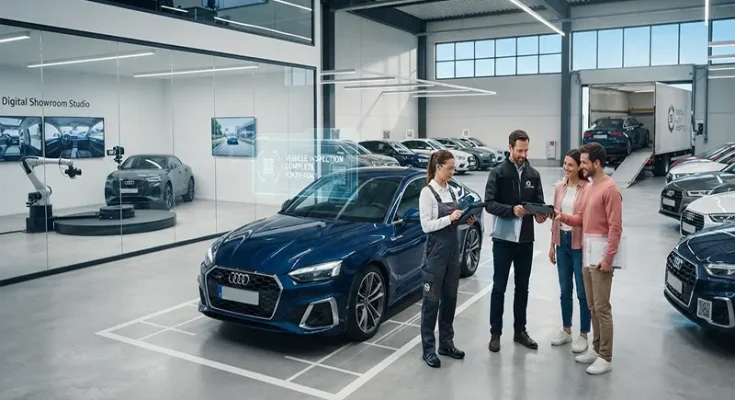
The automotive retail landscape has undergone a seismic shift. Gone are the days when buying a pre-owned vehicle strictly meant spending a Saturday afternoon pacing a gravel-strewn dealership lot under the watchful eye of a traditional salesperson. Today, modern consumers expect the same seamless, frictionless buying experience from the automotive industry that they get when purchasing consumer electronics on Amazon or booking a vacation on Airbnb.

Driven by digital-first consumer expectations, remote-first and online used car business models have evolved from experimental novelties into multi-billion-dollar powerhouses. For entrepreneurs, automotive innovators, and forward-thinking dealership owners, understanding these digital architectures is the key to capturing market share in a rapidly modernizing economy.

Core Business Models for Remote Used Car Sales

Transitioning away from the traditional brick-and-mortar sales paradigm requires adopting a framework tailored for digital scale, operational efficiency, and remote consumer trust. Three primary business models dominate the online used car space …

Best Online Used Car Business Models for Remote Sales Read More
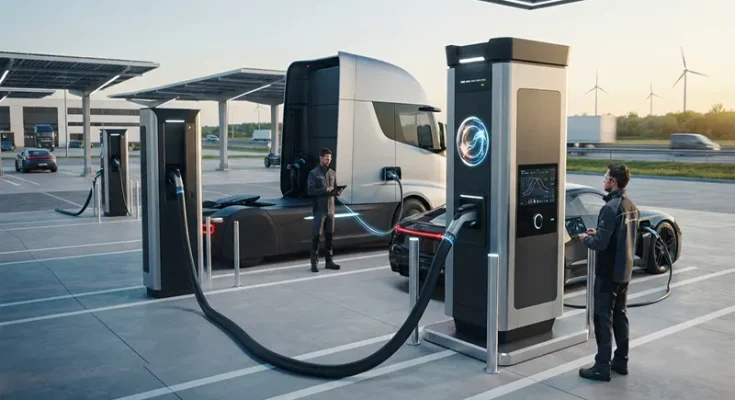
Fastest Megawatt Electric Vehicle Charging Technology Advancements

Fastest Megawatt Electric Vehicle Charging Technology Advancements

1. The Scaling Bottleneck

While passenger electric vehicles have achieved impressive fast-charging speeds, the heavy-duty commercial sector—comprising long-haul semi-trucks, transit buses, and industrial machinery—faces a massive energy replenishment hurdle. Traditional direct current (DC) fast chargers cannot power massive battery packs quickly enough to prevent devastating operational downtime.

Enter the Megawatt Charging System (MCS), the ultimate technological leap designed to deliver unprecedented energy output. Driven by recent global standardization milestones, liquid-cooled hardware innovations, and smart grid integration, megawatt-level charging is permanently transforming long-haul logistics and heavy transport.

2. The Engineering Anatomy of Megawatt Charging

To grasp the magnitude of MCS, one must look closely at the electrical thresholds required to move heavy commercial freight electrically:

  • Breaking Down the Numbers: While standard DC fast chargers max out around 350 kW, true megawatt architecture scales power delivery from 1 MW to 3.75 MW (operating up to 1,500 volts and 3,000 amps DC).
Fastest Megawatt Electric Vehicle Charging Technology Advancements Read More
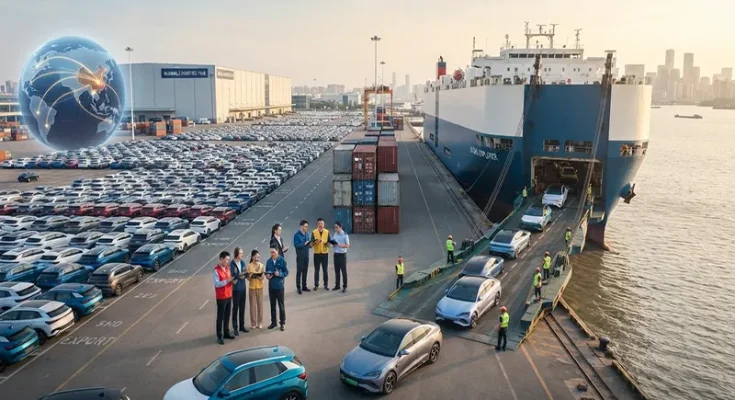
How Chinese Electric Vehicle Brands Are Expanding Globally

How Chinese Electric Vehicle Brands Are Expanding Globally

1. The Global Automotive Shift

Chinese electric vehicle (EV) manufacturers have rapidly transitioned from domestic market leaders into formidable global competitors. Propelled by surging export volumes and record-breaking overseas shipments, major automotive groups—such as BYD, Geely, NIO, and SAIC—are challenging legacy Western, Japanese, and Korean brands across Europe, Southeast Asia, Latin America, and the Middle East.

Driven by integrated supply chain infrastructure, aggressive software-hardware innovation, and adaptable regional strategies, Chinese EV brands are fundamentally reshaping the worldwide automotive landscape.

2. The Pillars of Competitiveness: Cost, Supply Chain, and Innovation

The rapid international ascent of Chinese automakers is not accidental; it is the result of decades of strategic state-backed development, structural advantages, and unmatched industrial execution.

  • Vertical Integration: Chinese manufacturers retain a high degree of control over critical supply chain touchpoints—from upstream lithium refining and raw mineral processing to in-house battery cell production and final assembly. This mastery significantly reduces input
How Chinese Electric Vehicle Brands Are Expanding Globally Read More