Chrome and Culture: The Impact of Iconic Cars in Movies and Media

Chrome and Culture: The Impact of Iconic Cars in Movies and Media

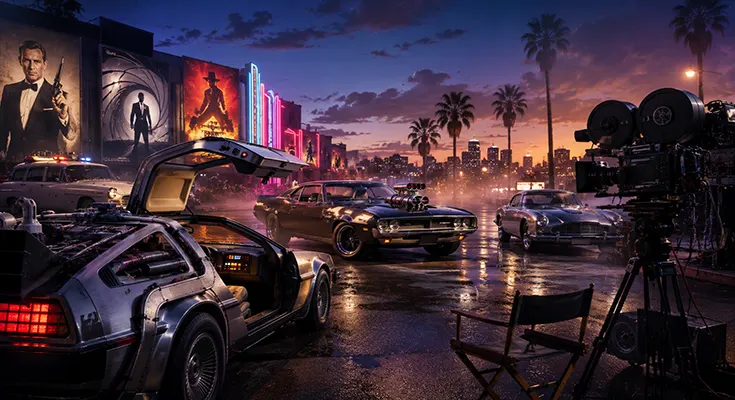
Cars are far more than mere props in film and television; they are characters, symbols, and often, the very heart of the narrative. The cultural impact of iconic cars in movies and media is profound, transforming ordinary vehicles into global legends, shaping design trends, and influencing the collective identity of generations.

The Car as Character and Identity

In cinema, a car often serves as an extension of the protagonist’s personality, driving not just the action, but the emotional core of the story.

  • The Spy’s Sophistication: The Aston Martin DB5 from the James Bond franchise became the ultimate symbol of British elegance, technological prowess, and effortless cool. Equipped with gadgets like an ejector seat and machine guns in Goldfinger (1964), the DB5 immediately transcended its status as a luxury vehicle to become the benchmark for all cinematic spy cars, influencing Aston Martin’s real-world brand identity for decades.
  • The Time Machine: The
Chrome and Culture: The Impact of Iconic Cars in Movies and Media Read More
The Intelligent Network: Connected Smart Car Ecosystems and IoT Integration

The Intelligent Network: Connected Smart Car Ecosystems and IoT Integration

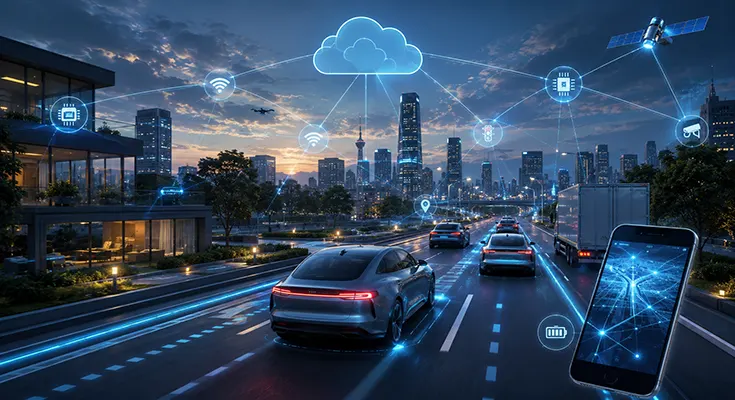
The modern vehicle is rapidly evolving from a standalone mode of transport into a sophisticated, mobile node within a vast, interconnected network. This revolution is driven by the integration of the Internet of Things (IoT), forming complex connected smart car ecosystems that leverage real-time data to enhance safety, efficiency, and the overall driving experience. This deep connectivity is the foundational technology enabling the future of smart mobility and autonomous driving.

IoT as the Backbone of V2X Communication

At its core, the connected car functions as a massive sensor gathering data on its own performance and surrounding environment. IoT technology provides the communication channels (often leveraging 5G networks for high speed and low latency) necessary for the vehicle to communicate with everything (V2X).

  • Vehicle-to-Vehicle (V2V): Cars exchange critical data (speed, location, braking status) directly with nearby vehicles. This allows cars to “see” around blind corners or anticipate sudden
The Intelligent Network: Connected Smart Car Ecosystems and IoT Integration Read More
Defying Gravity: How Supercars Achieve Extreme Speed and Performance

Defying Gravity: How Supercars Achieve Extreme Speed and Performance

The pursuit of breakneck speed and physics-defying performance is the essence of the supercar. These machines are not merely fast; they are rolling laboratories where the limits of automotive engineering are continually tested and redefined. Achieving their extreme capabilities—often accelerating from 0 to 100 km/h in under three seconds and cruising beyond 320 km/h (200 mph)—relies on a three-pronged approach: Brute Power, Minimal Weight, and Masterful Aerodynamics.

1. Brute Power: The Engine as Art

At the heart of every supercar is a powertrain designed for maximum output.

  • Engine Mastery: While traditional supercars relied on large-displacement, naturally aspirated engines (like the iconic V10s and V12s) to produce high horsepower, modern hypercars use sophisticated technology to generate equivalent power from smaller units. Turbocharging and supercharging are universally employed, forcing massive amounts of air into the combustion chambers to achieve staggering output, often exceeding 750 horsepower. The Bugatti Chiron’s Quad-Turbo W16 is the
Defying Gravity: How Supercars Achieve Extreme Speed and Performance Read More
The Hydrogen Horizon: Development and Market Potential of Fuel Cell Vehicles

The Hydrogen Horizon: Development and Market Potential of Fuel Cell Vehicles

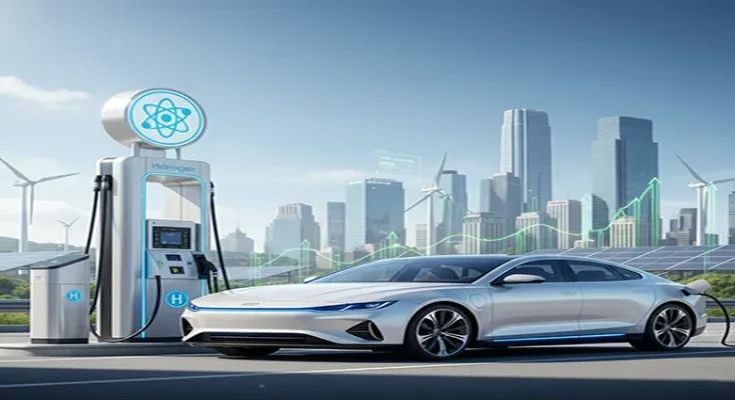
The push for a zero-emission future has intensified the focus on hydrogen-powered vehicle development as a critical complement to battery-electric technology. Fuel Cell Electric Vehicles (FCEVs), which combine hydrogen with oxygen to produce electricity and emit only water vapor, offer distinct advantages over battery-only systems, particularly in applications demanding long range and rapid refueling. While passenger adoption remains limited, the burgeoning market potential lies in heavy-duty commercial transport and strategic national energy initiatives.

Development: Fuel Cell Technology Breakthroughs

Current FCEV development is concentrated on boosting efficiency, performance, and durability.

  • Enhanced Powertrain Efficiency: Leading manufacturers like Hyundai and Toyota are continually refining their fuel cell stack technology. Newer generations of systems are achieving significant increases in power output and efficiency, leading to higher system output and quicker acceleration. For example, recent models boast driving ranges well over 800 km on a single, quick hydrogen refill, effectively addressing “range anxiety” often associated
The Hydrogen Horizon: Development and Market Potential of Fuel Cell Vehicles Read More
Gear Shifts: Amazing Car Engineering Innovations That Changed the World

Gear Shifts: Amazing Car Engineering Innovations That Changed the World

The car is arguably the most transformative invention of the modern era, reshaping cities, economies, and personal freedom. This revolution wasn’t driven by a single invention, but by a continuous stream of amazing car engineering innovations that fundamentally changed how we live, work, and travel. From making vehicles affordable to making them incredibly safe, these breakthroughs define automotive history.

The Innovations of Accessibility and Power

Early innovations focused on making the car practical, affordable, and powerful, transitioning it from a luxury curiosity to a democratic necessity.

  • The Internal Combustion Engine (ICE): While developed in the mid-19th century, its refinement by engineers like Karl Benz in 1886 led to the first true gasoline-powered automobile. The ICE provided a compact, energy-dense power source that paved the way for modern transportation.
  • The Assembly Line: Henry Ford’s introduction of the moving assembly line in 1913 was a manufacturing, not just an engineering, marvel. By
Gear Shifts: Amazing Car Engineering Innovations That Changed the World Read More